You know what the tiles are. Now it’s time to understand what you’re trying to build. In American Mahjong, you work toward completing one of the hands shown on the current Mahjong card.
Lesson 1
What Is a Mahjong Hand?
A completed American Mahjong hand normally contains 14 tiles arranged in a specific pattern shown on the card. Your goal isn’t simply to collect matching tiles—you’re collecting the specific combination required by a hand.
Lesson 2
Meet the Mahjong Card
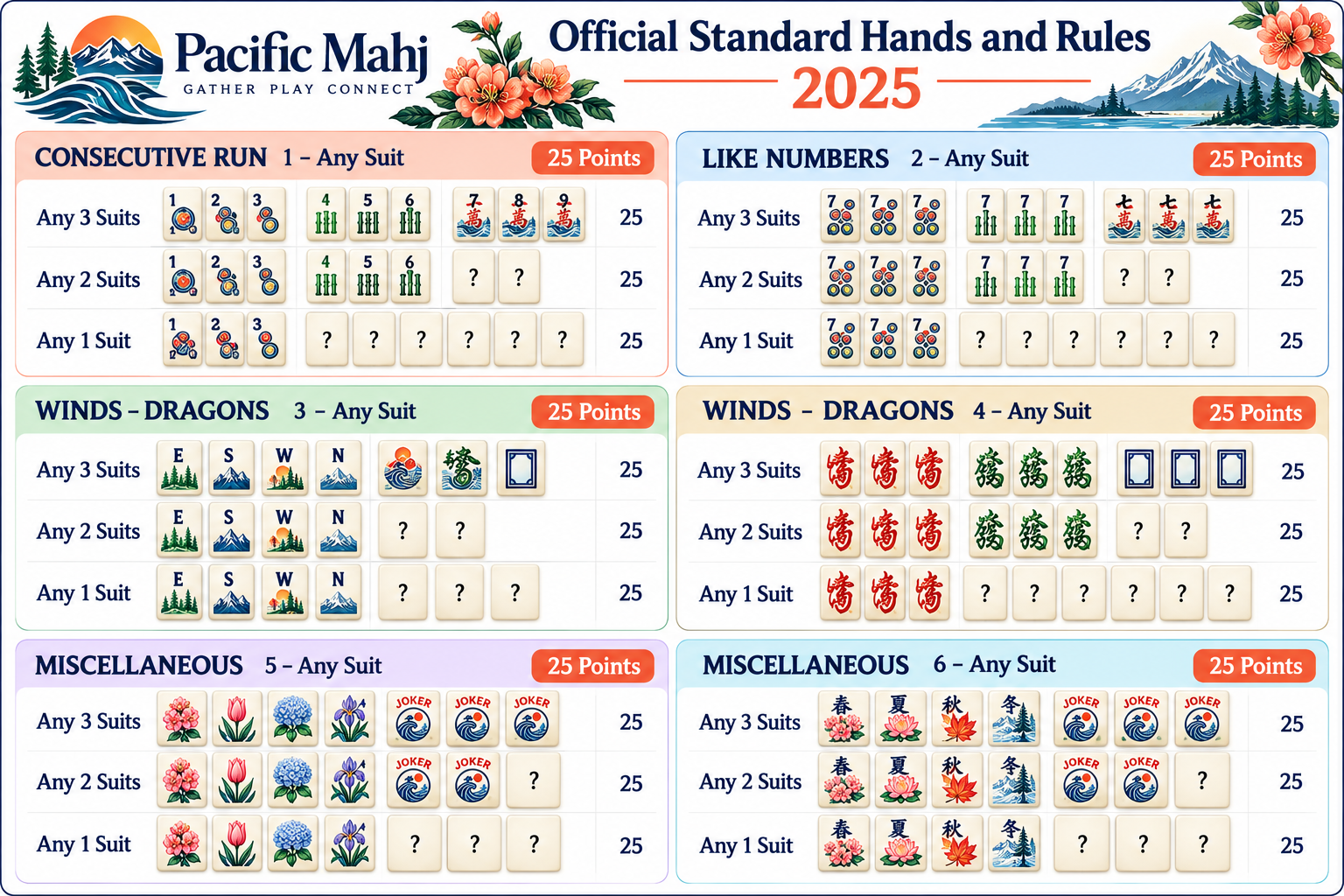
Think of the Mahjong card as a menu of winning hands. It contains many possibilities, is organized into sections, and changes each year. You can look at your card throughout the game. You are not expected to memorize it.
Teaching example of an American Mahjong card. This is an educational illustration, not an official annual playing card.
Lesson 3
Meet the Building Blocks
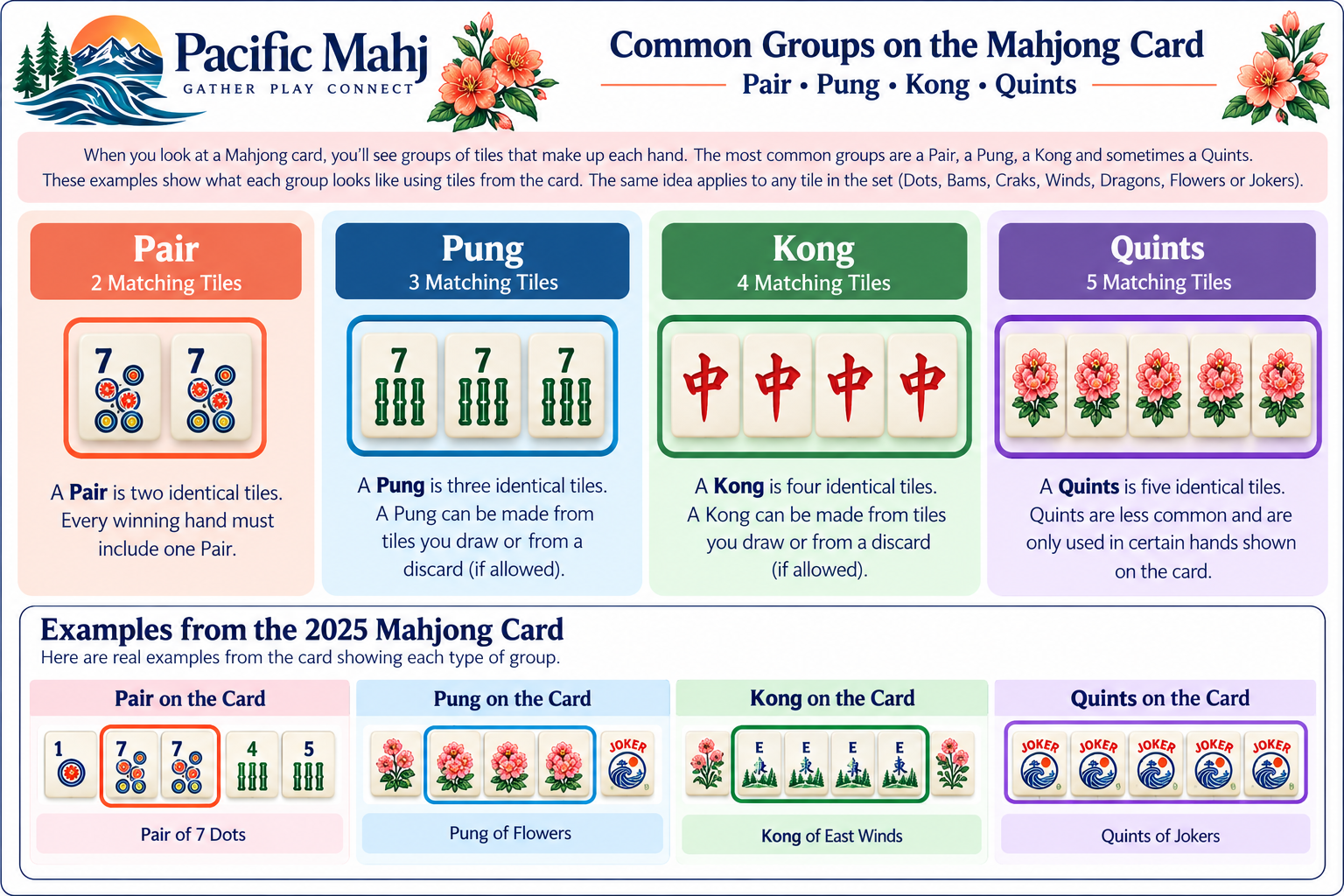
A single is one tile, a pair is two identical tiles, a Pung is three identical tiles, a Kong is four identical tiles, and a Quint is five identical tiles. These names describe the groups you’ll see on the card.
Teaching examples showing how matching tiles form a Pair, Pung, Kong, and Quint.
Lesson 4
How to Read One Line
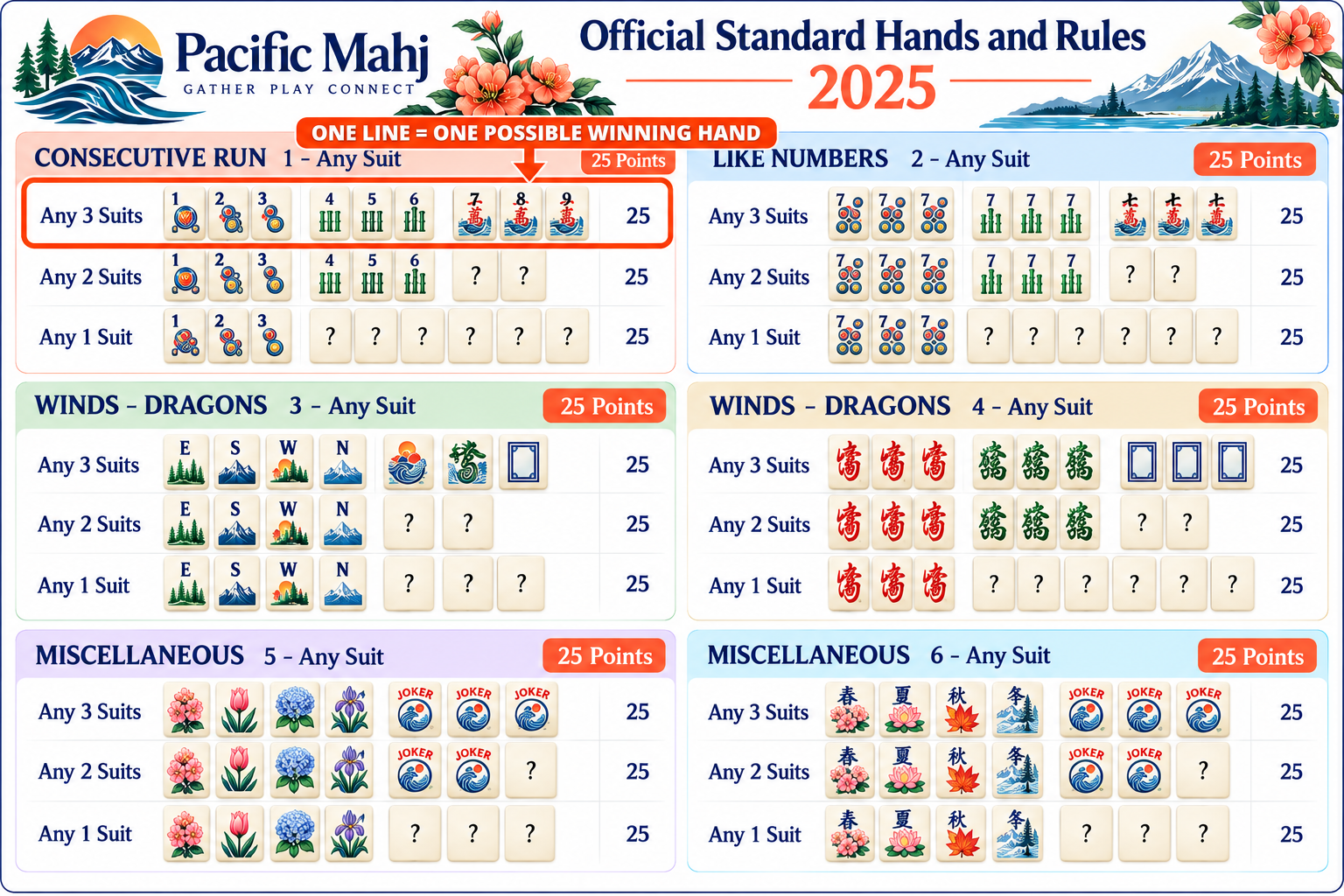
Read a card line as a series of required groups. Look at how many tiles are in each group, which numbers or honors are shown, and how the groups relate to one another. We’ll practice this much more in Chapter 7.
The orange outline shows one complete line on the card. Each complete line represents one possible winning hand.
Lesson 5
What Do the Colors Mean?
Colors on the card show relationships between suits; they do not automatically mean Dots, Bams, and Craks. One color means the same suit, while a different color means a different suit. The actual suit can often vary.
Lesson 6
Numbers, Letters & Symbols
Numbers generally represent numbered suited tiles. N, E, W, and S represent Winds. F represents Flowers, and D represents Dragons. Other symbols and combinations will become familiar as you use the card.
Lesson 7
What Does “Any” Mean?
Words such as Any Suit, Any Dragon, or Any Consecutive Numbers give you choices. They make a line flexible rather than locking you into one exact set of tiles.
Lesson 8
Parentheses Are Instructions
Don’t look only at the colorful pattern. The written instructions matter too. They can explain suit requirements, number relationships, Dragon requirements, and other conditions needed to complete the hand.
Lesson 9
Exposed vs. Concealed
Some hands allow qualifying groups to be exposed during play. Concealed hands generally need to stay concealed while you build them. We’ll learn exactly how calling and exposures work when we begin playing.
Lesson 10
Choosing a Possible Hand
At the beginning, look for possibilities rather than forcing a final decision. Notice which card lines already match several of your tiles and which directions give you flexibility.
Lesson 11
You Can Change Your Mind
You are not locked into the first hand that catches your eye. New tiles arrive, tiles are discarded, and the Charleston changes your rack. Changing direction is a normal part of Mahjong.