Lesson 1
Why Do We Have a Charleston?
Your starting tiles probably don’t form anything close to a completed hand. The Charleston lets you pass tiles that seem less useful, receive new possibilities, and begin narrowing down directions on the card.
Before regular play begins, American Mahjong players exchange tiles through a series of passes called the Charleston. It may seem strange at first, but it helps everyone improve a starting hand and explore possibilities.
Your starting tiles probably don’t form anything close to a completed hand. The Charleston lets you pass tiles that seem less useful, receive new possibilities, and begin narrowing down directions on the card.
Before moving any tiles, look at your rack and your card. Ask what you have several of and which patterns seem promising. You do not need to choose your final hand before the Charleston.
Charleston passes normally involve three tiles. Beginners can start by identifying isolated tiles or tiles that don’t support their strongest possibilities. There is no magic formula for the perfect pass.
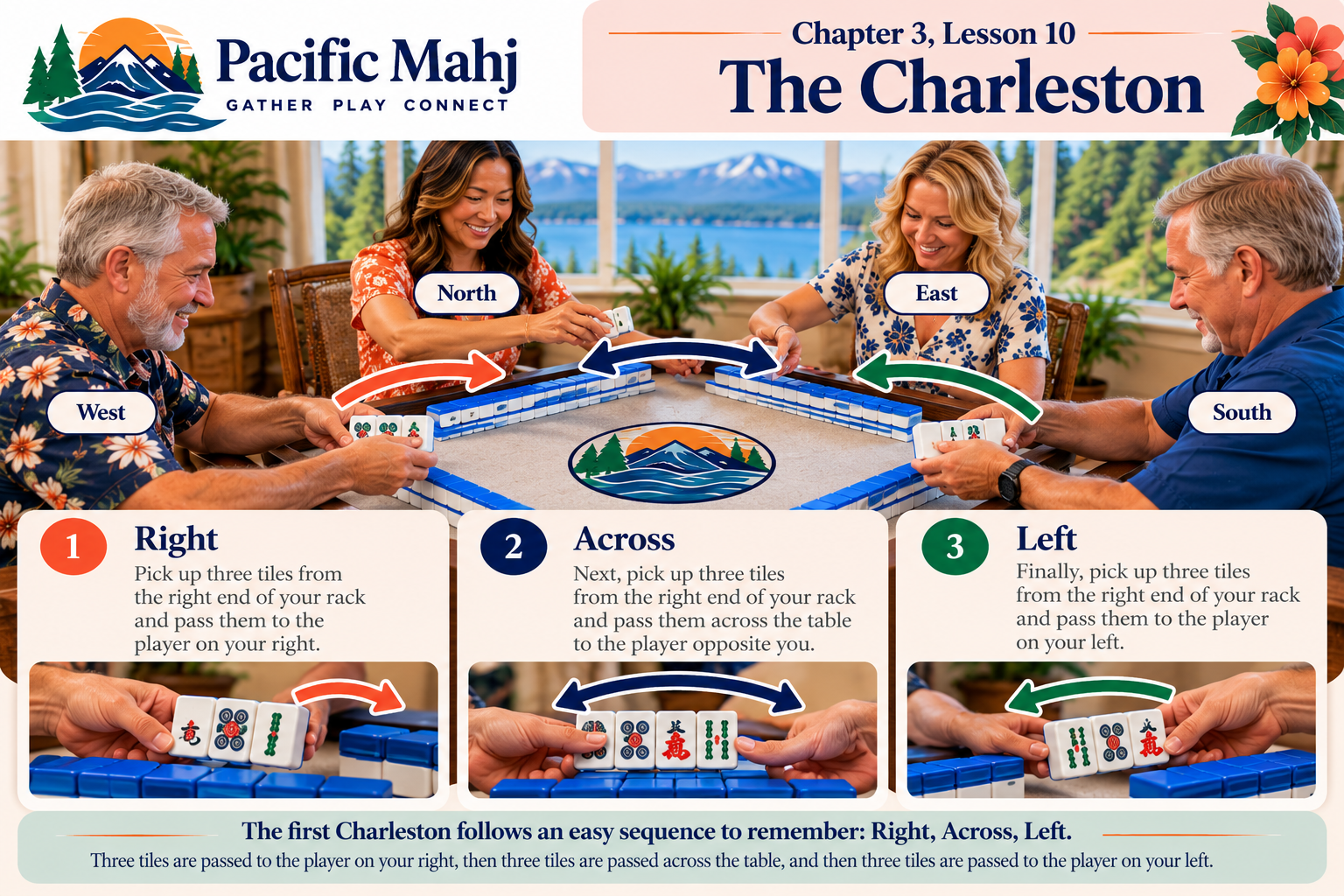
The first Charleston moves in this order: three tiles to the player on your RIGHT, then three ACROSS the table, then three to your LEFT. Think: Right → Across → Left.
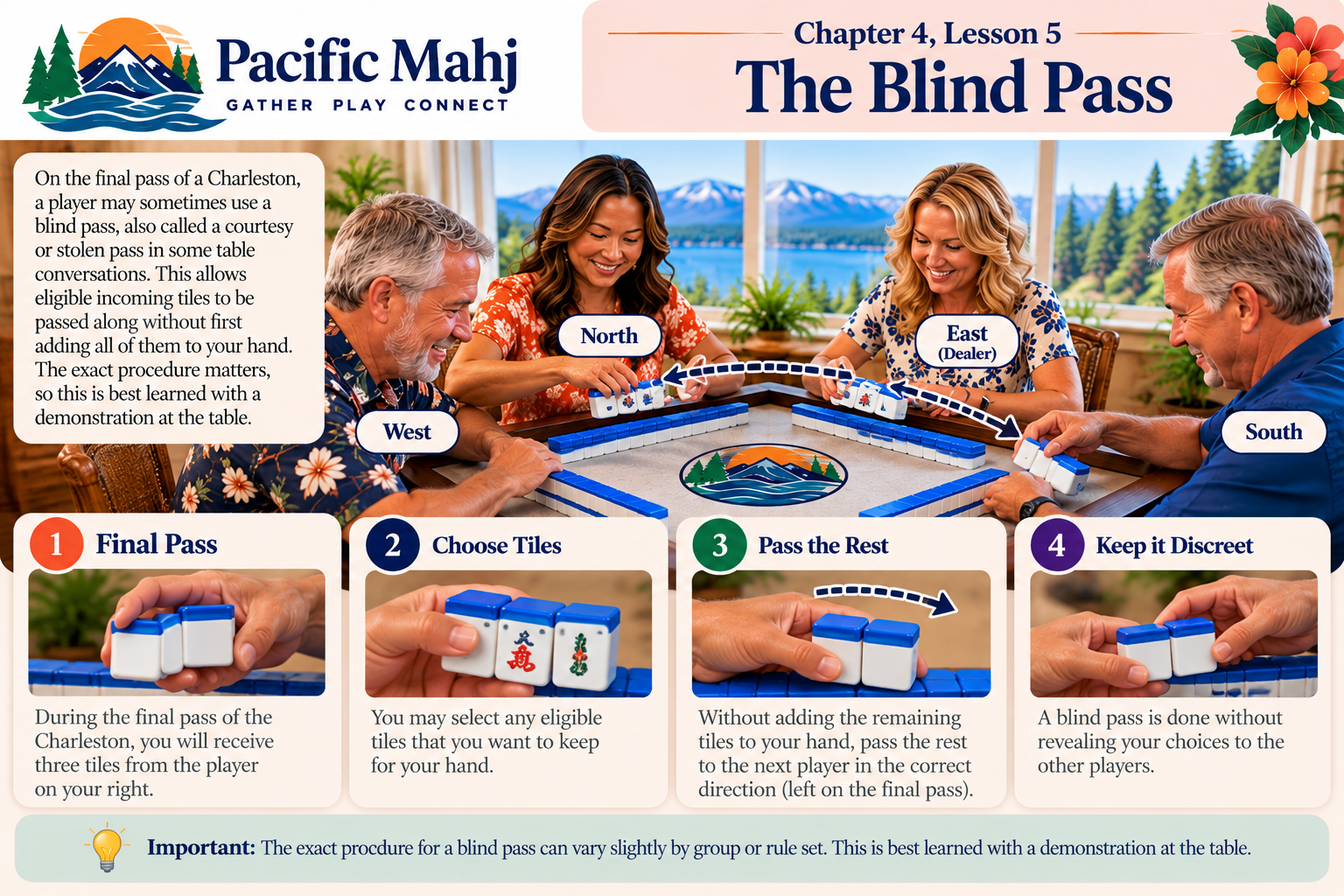
On the final pass of a Charleston, rules may allow you to pass along one or more tiles without looking at all the tiles you receive. Your host can demonstrate the blind-pass procedure at the table; it is much easier to understand when you see it.
After the first Charleston, pause and reassess your rack. A possibility you liked may have weakened while a different hand became much stronger. Changing direction isn’t failure—it’s Mahjong.
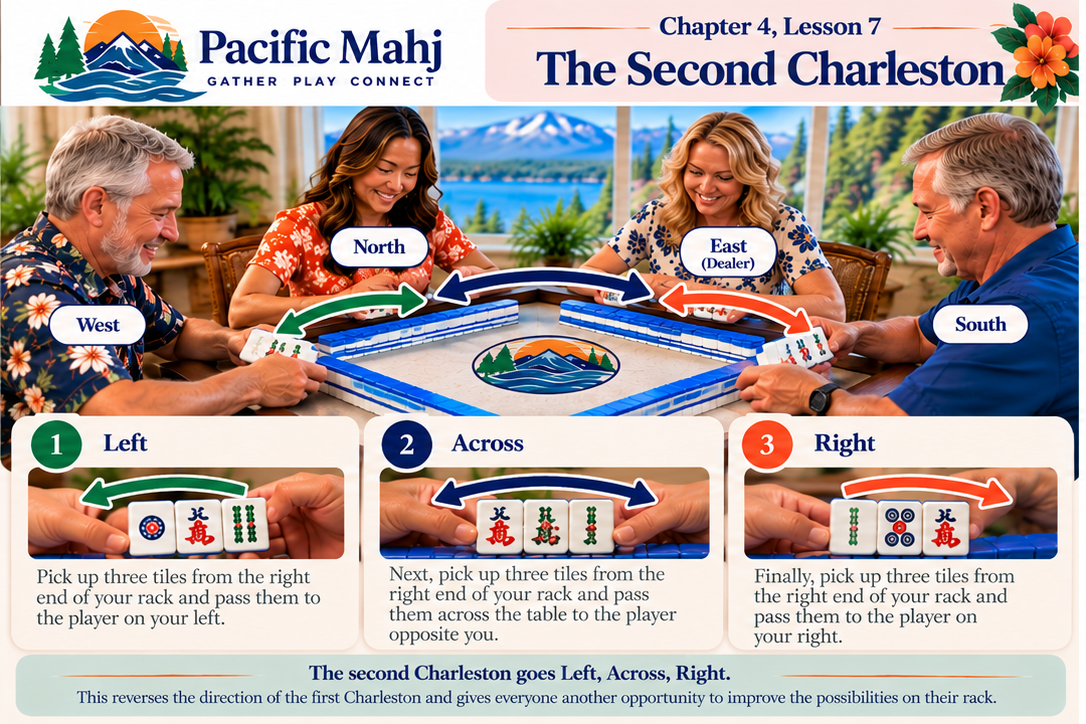
When the table continues with a second Charleston, the direction reverses: LEFT, then ACROSS, then RIGHT. That gives you an easy pattern to remember: Right-Across-Left, then Left-Across-Right.
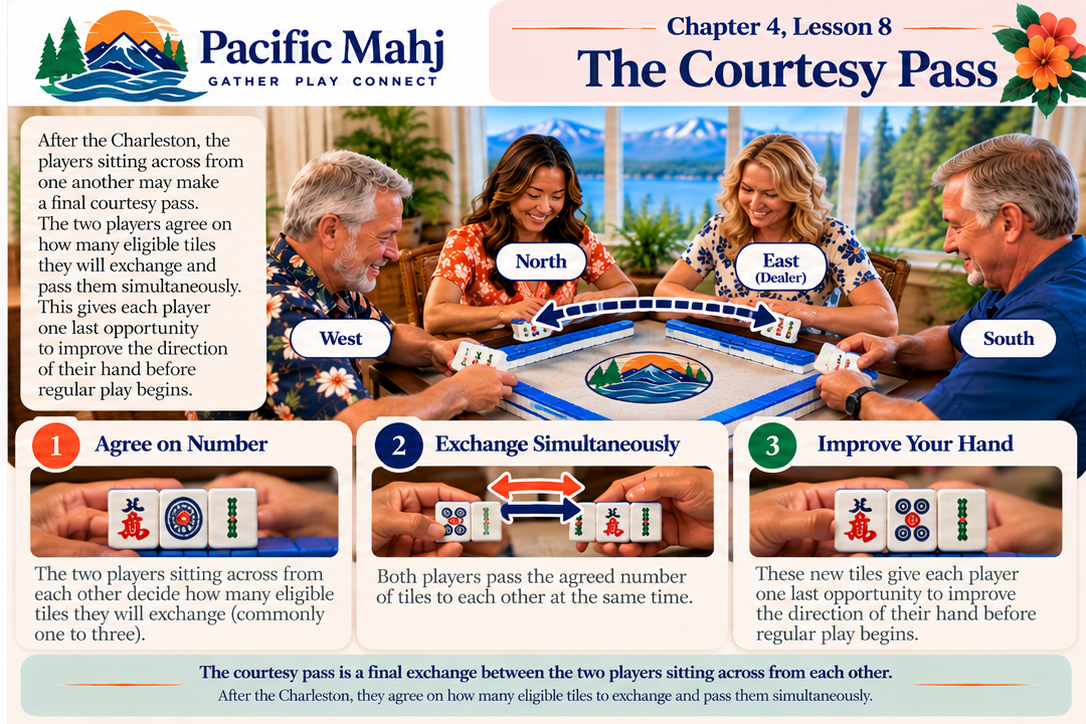
After the Charleston, you and the player across from you may agree to exchange a small number of tiles in a courtesy pass. The exact number is agreed upon by both players before the exchange.
Keep tiles that support several possible hands, form useful pairs or groups, or strengthen patterns already developing. Flexibility is valuable, especially while you’re still deciding on a direction.
Consider passing isolated tiles and tiles that don’t support your likely hands. Don’t worry about mastering Charleston strategy yet—experienced players continue improving this skill for years.
Passed something you later wished you’d kept? Changed your mind several times? Still unsure which hand you’re playing? All of that is normal. The goal right now is to become comfortable with the process.
You’re ready for the next chapter.