Lesson 1
Who Can Call a Discard?
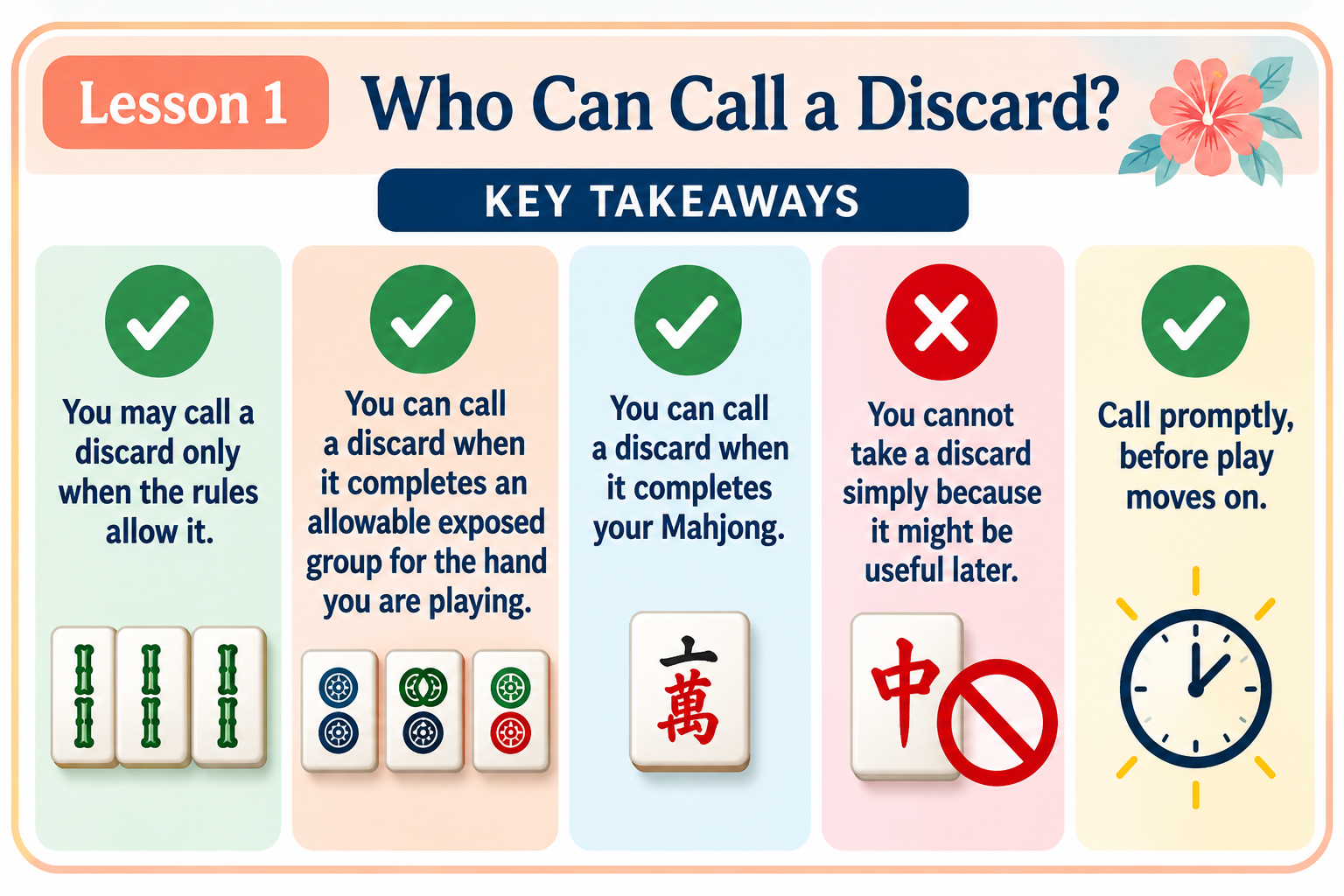
A discarded tile may be called only when the rules allow it. During regular play, you may call a discard when it completes an allowable exposed group required by the hand you are playing, or when that discard completes your Mahjong. You cannot take a discard simply because it might be useful later. Calls should be made promptly, before play moves on.
Lesson 2
Mahjong Takes Priority
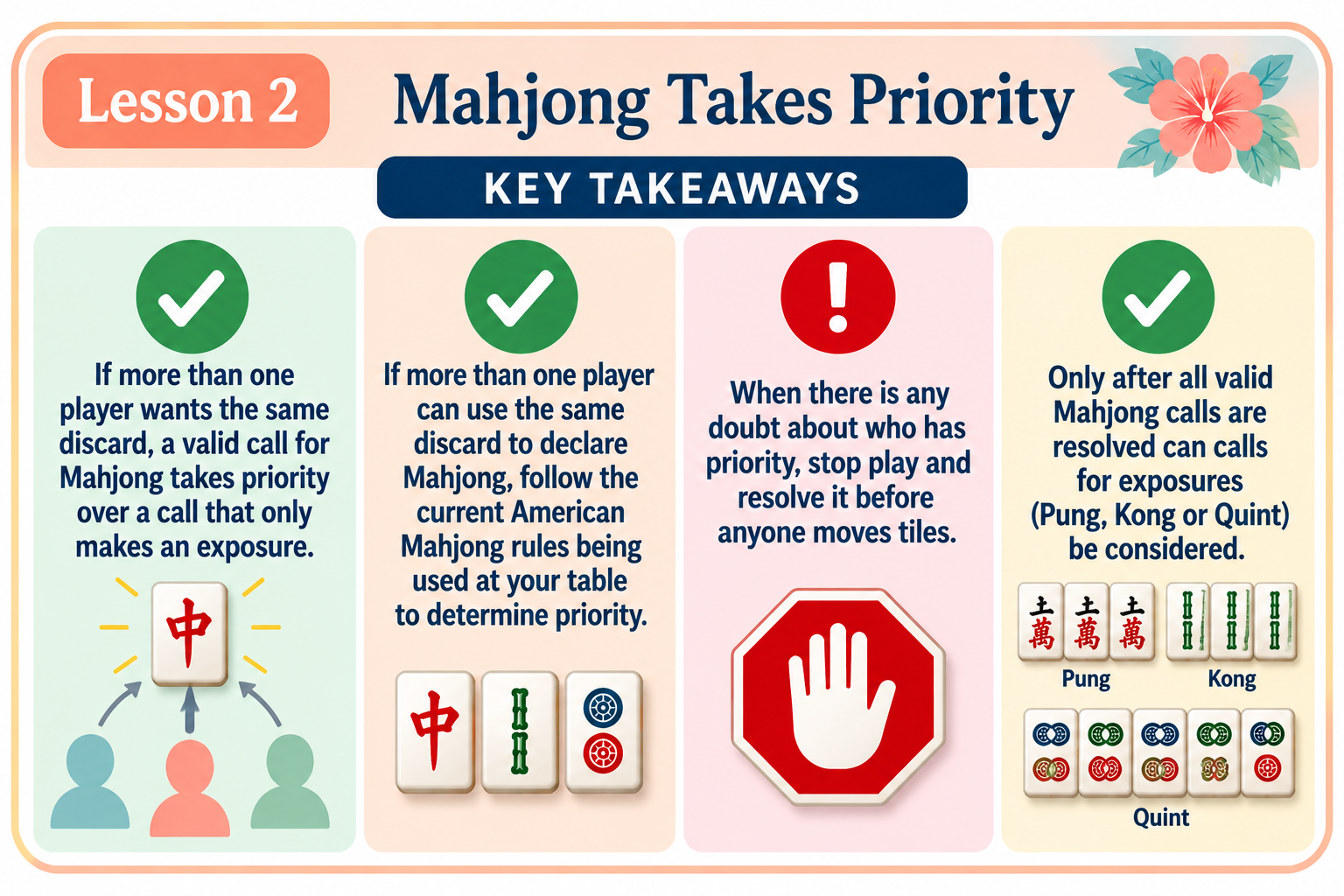
Sometimes more than one player wants the same discarded tile. A valid call for Mahjong takes priority over a call that would only make an exposure. If more than one player can use the same discard to declare Mahjong, follow the current American Mahjong rules being used at your table to determine priority. When there is any doubt, stop play and resolve it before anyone moves tiles.
Lesson 3
Calling for an Exposure
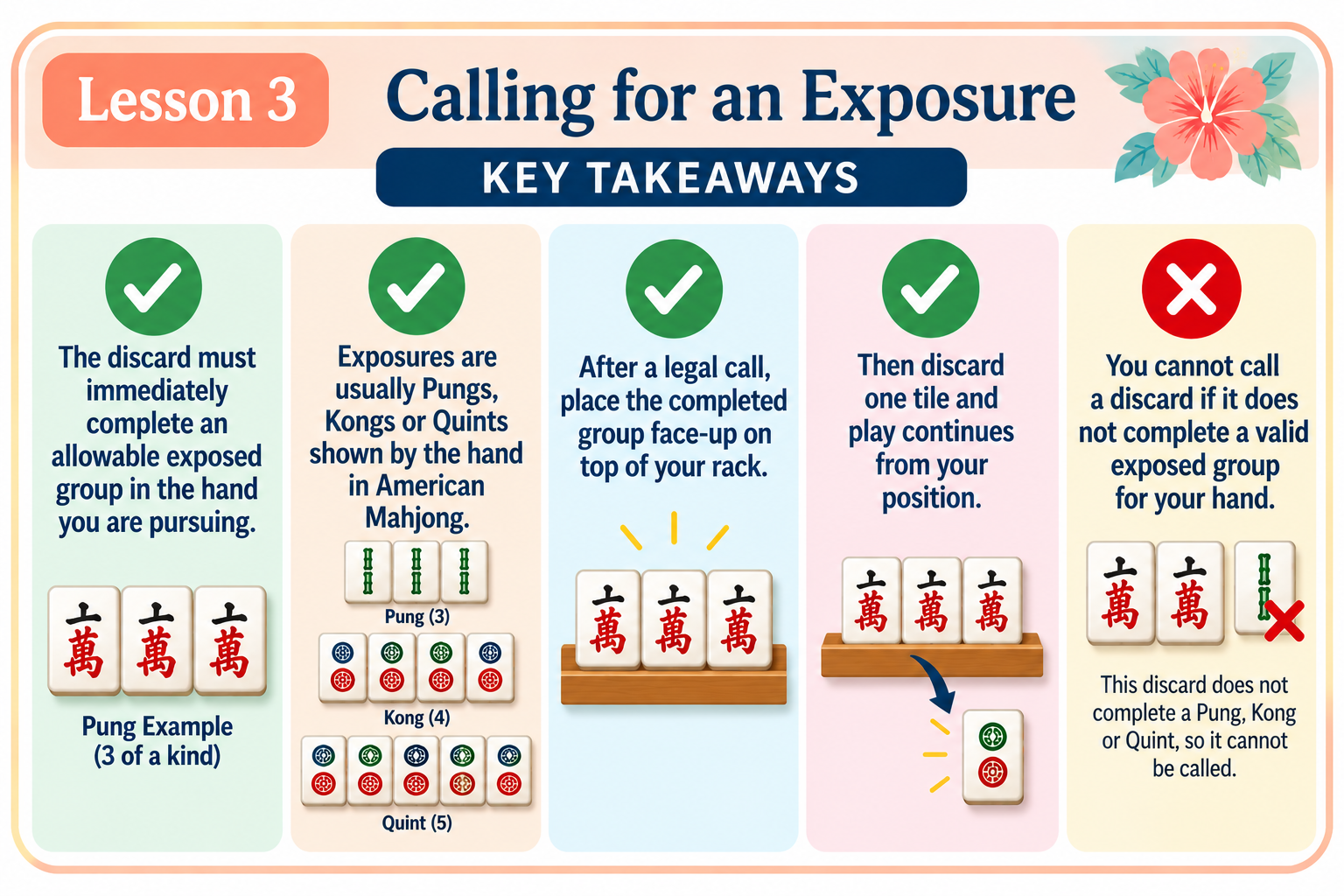
To call a discard during regular play, the tile must immediately complete an allowable exposed group in the hand you are pursuing. In American Mahjong, that usually means a Pung, Kong or Quint shown by the hand. After a legal call, place the completed group face-up on top of your rack, discard one tile, and play continues from your position.
Lesson 4
Singles and Pairs
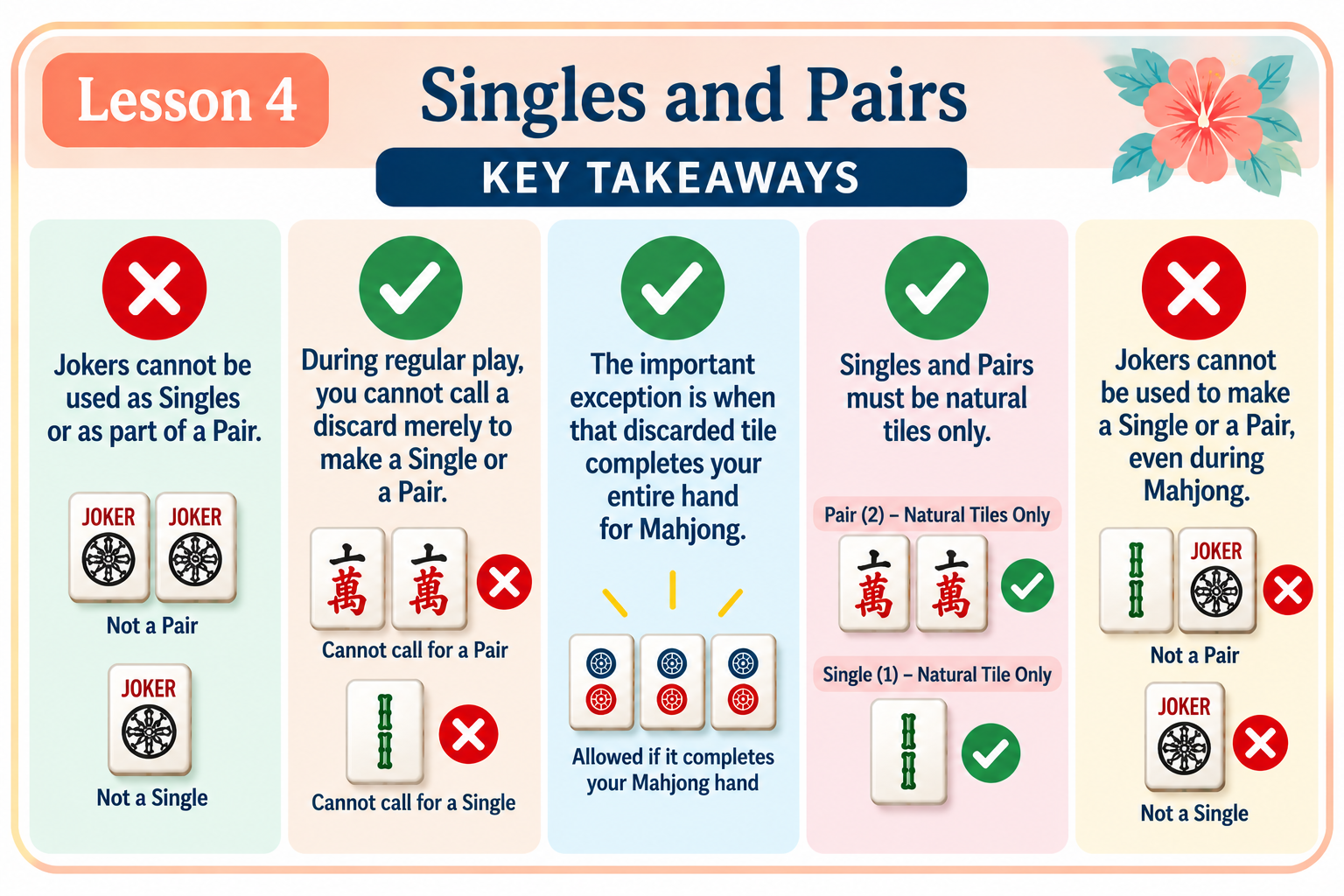
Singles and Pairs have special restrictions. Jokers cannot be used as Singles or as part of a Pair. During ordinary play, you also cannot call a discard merely to make a Single or Pair. The important exception is when that discarded tile completes your entire hand for Mahjong. A helpful reminder is: Singles and Pairs = natural tiles only.
Lesson 5
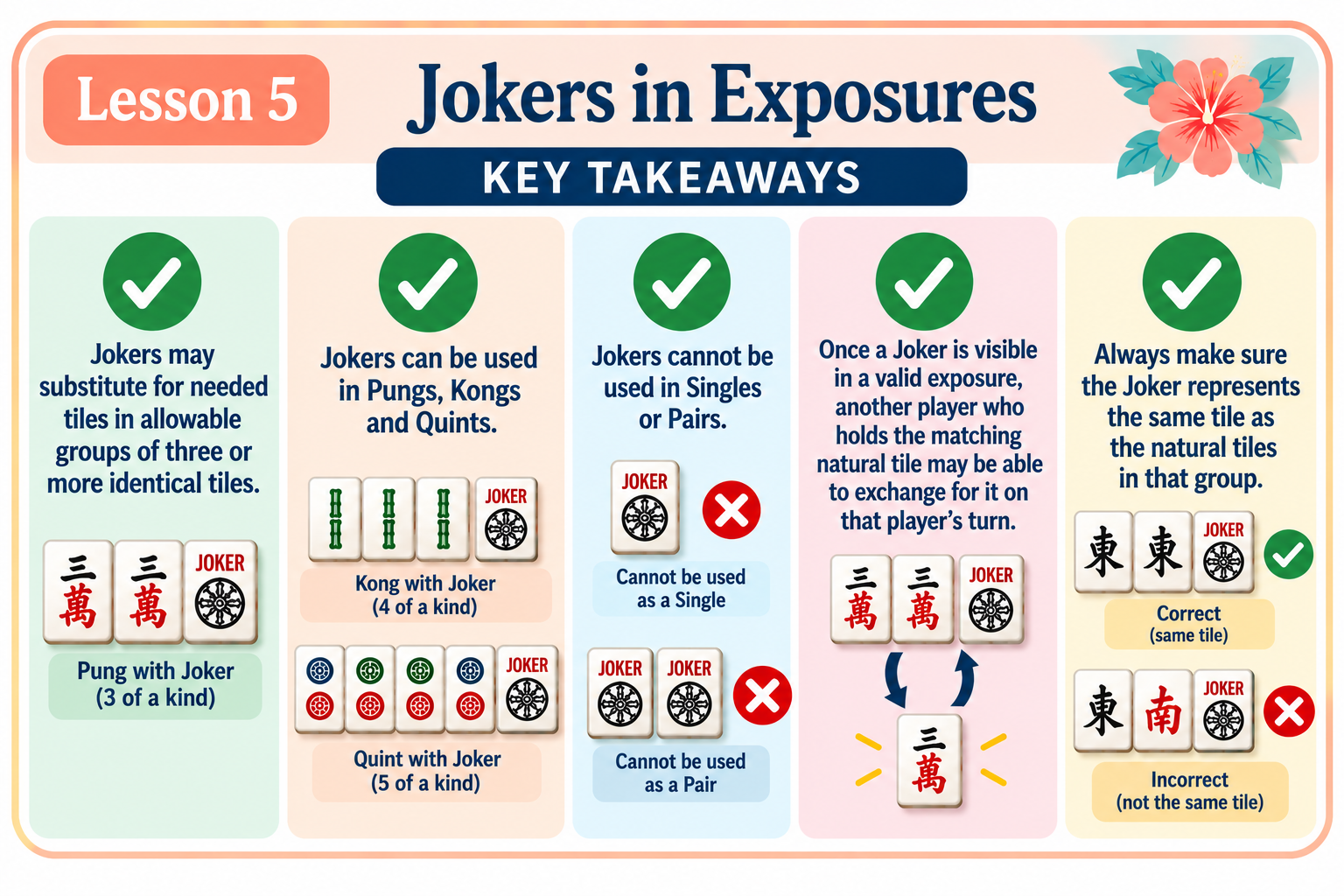
Jokers in Exposures
Jokers may substitute for needed tiles in allowable groups of three or more identical tiles, such as Pungs, Kongs and Quints. They cannot be used in Singles or Pairs. Once a Joker is visible in a valid exposure, another player who holds the matching natural tile may be able to exchange for it on that player’s turn. Always make sure the Joker represents the same tile as the natural tiles in that group.
Lesson 6
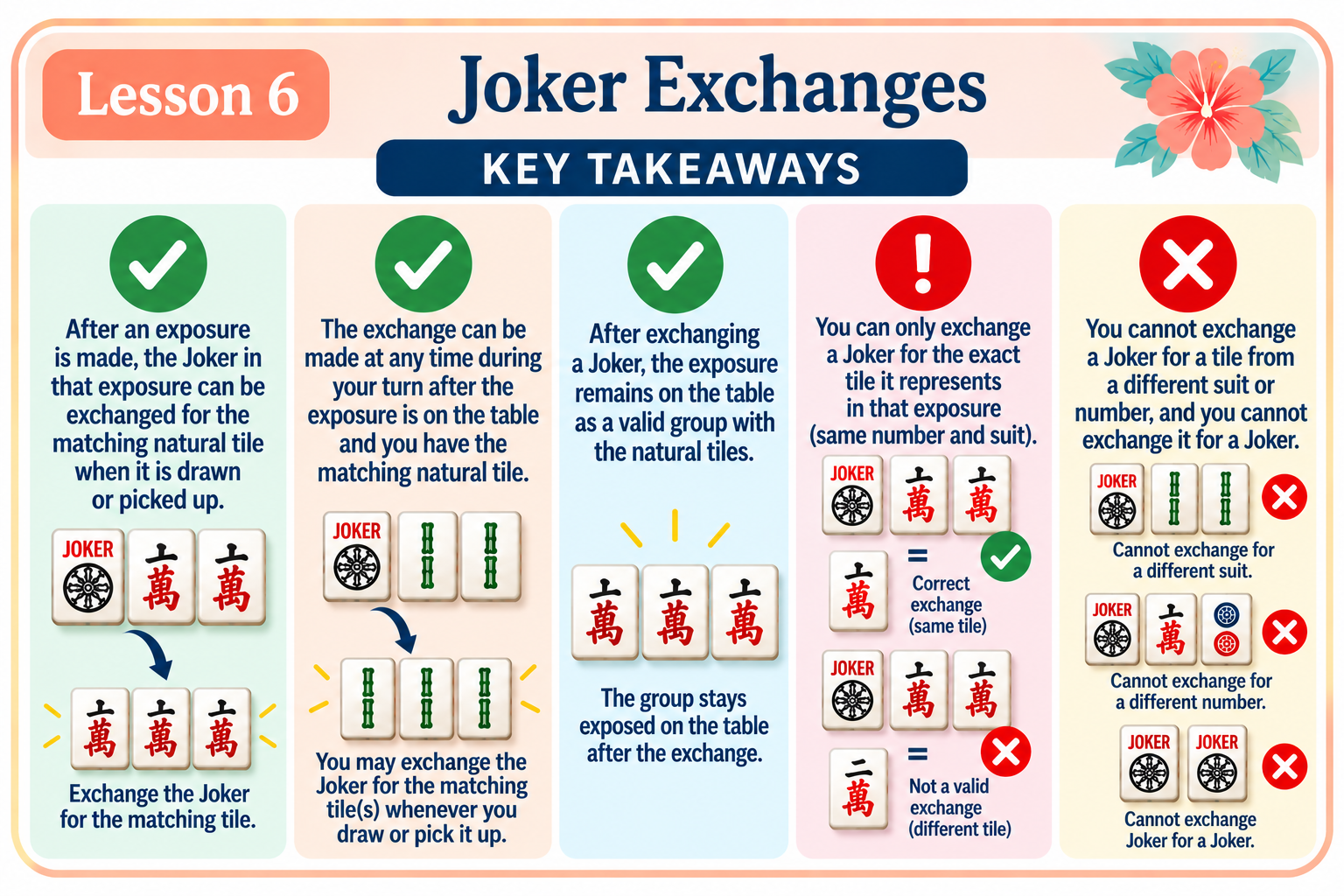
Joker Exchanges
A Joker exchange is made during your turn. If another player has a valid exposure containing a Joker and you have the matching natural tile, you may place that natural tile into the exposure and take the Joker into your own hand. The exposure remains complete, and the Joker may then be used elsewhere where legally allowed. Complete the exchange before you discard to end your turn.
Lesson 7
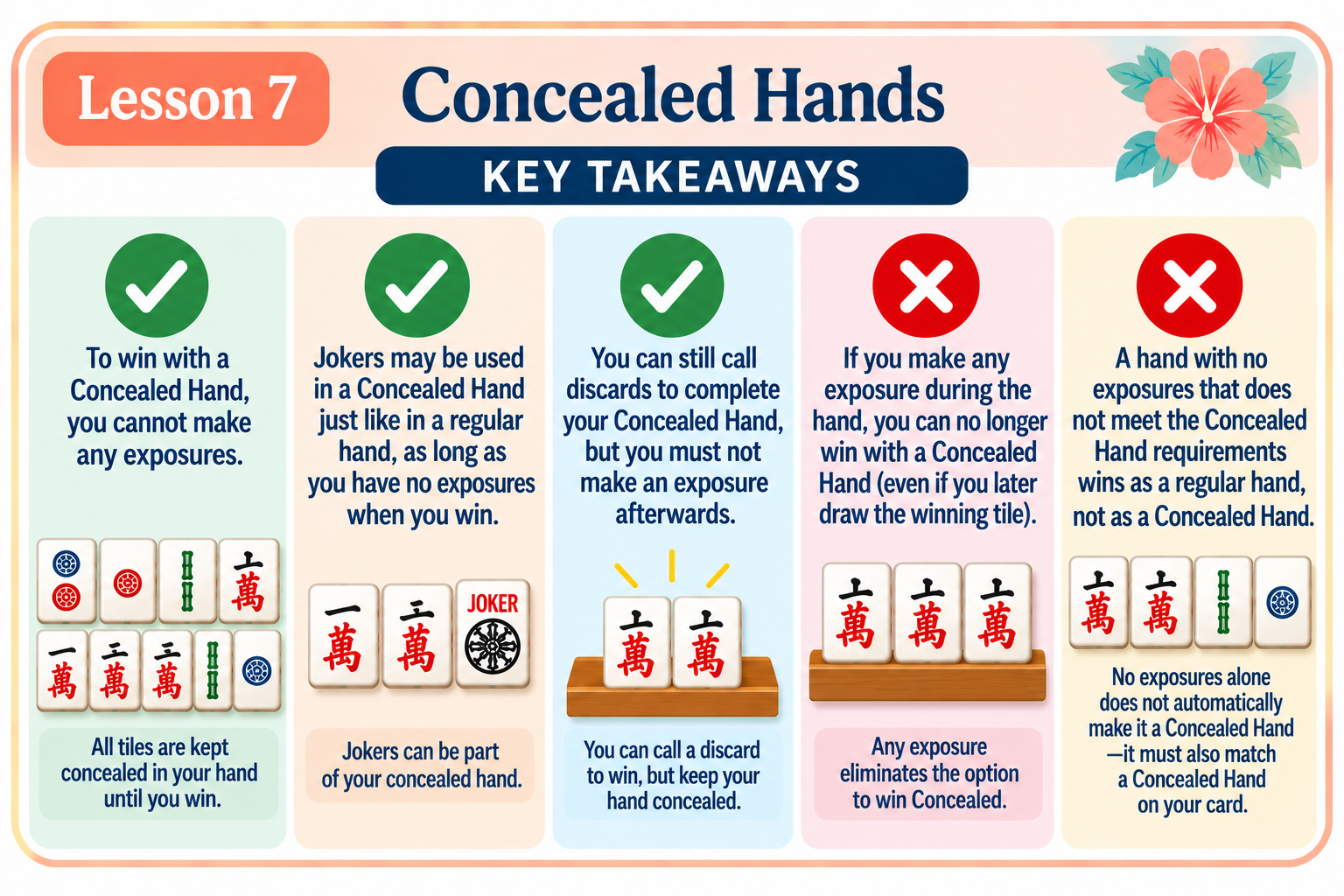
Concealed Hands
Some lines on the card are marked Concealed. If you are playing one of those hands, you normally keep the hand concealed and do not make exposures during play. A discard may still be called when it gives you Mahjong, if the hand and current rules allow it. Before calling a tile, check whether your chosen line is exposed or concealed.
Lesson 8
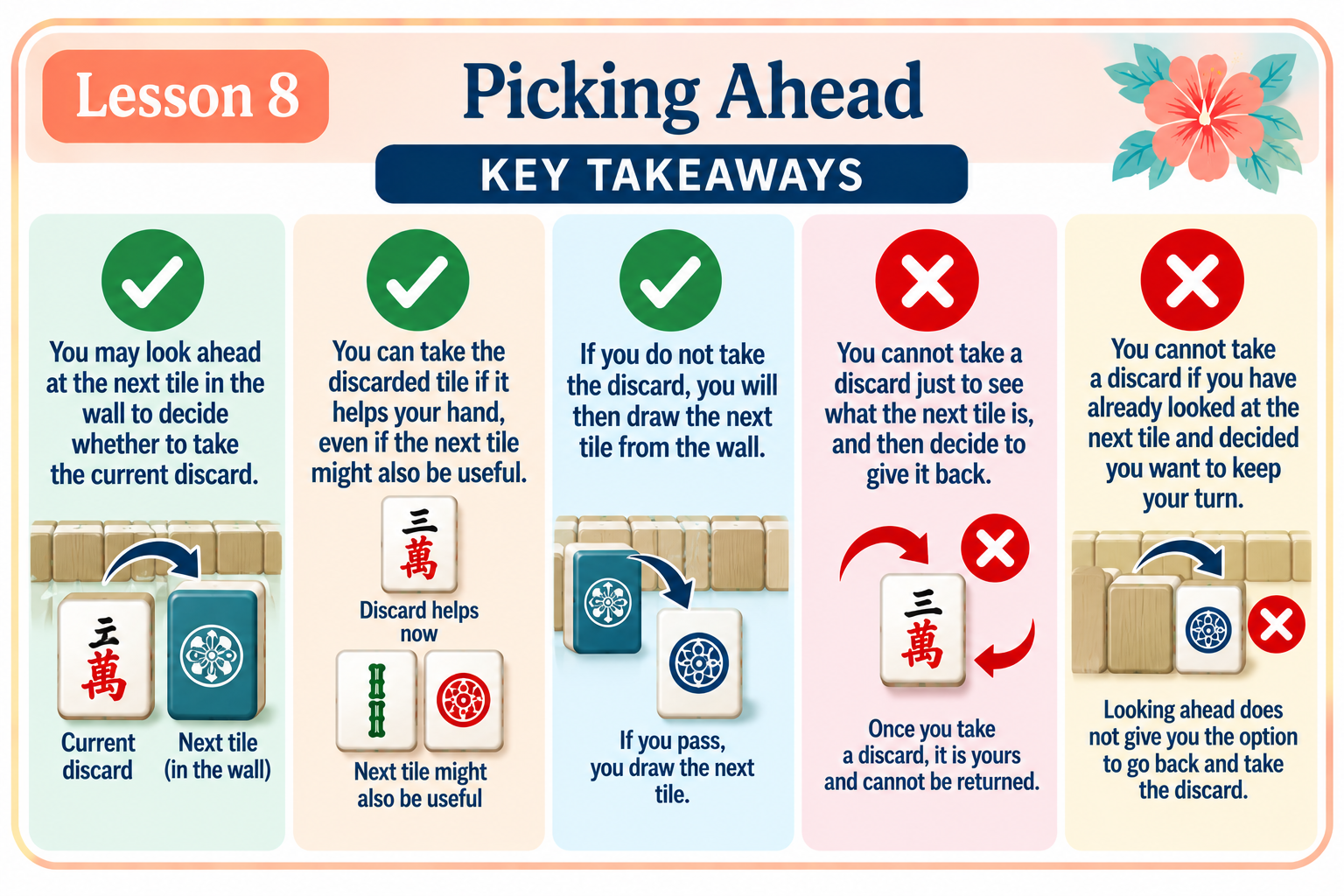
Picking Ahead
Wait until the previous player has completed the turn and the discard has had a fair chance to be called before drawing from the wall. Picking ahead can create confusion about whether a discard was still available and whose turn it is. A steady table rhythm helps everyone: discard, pause for calls, then the next player draws.
Lesson 9
Out-of-Turn & Misplays
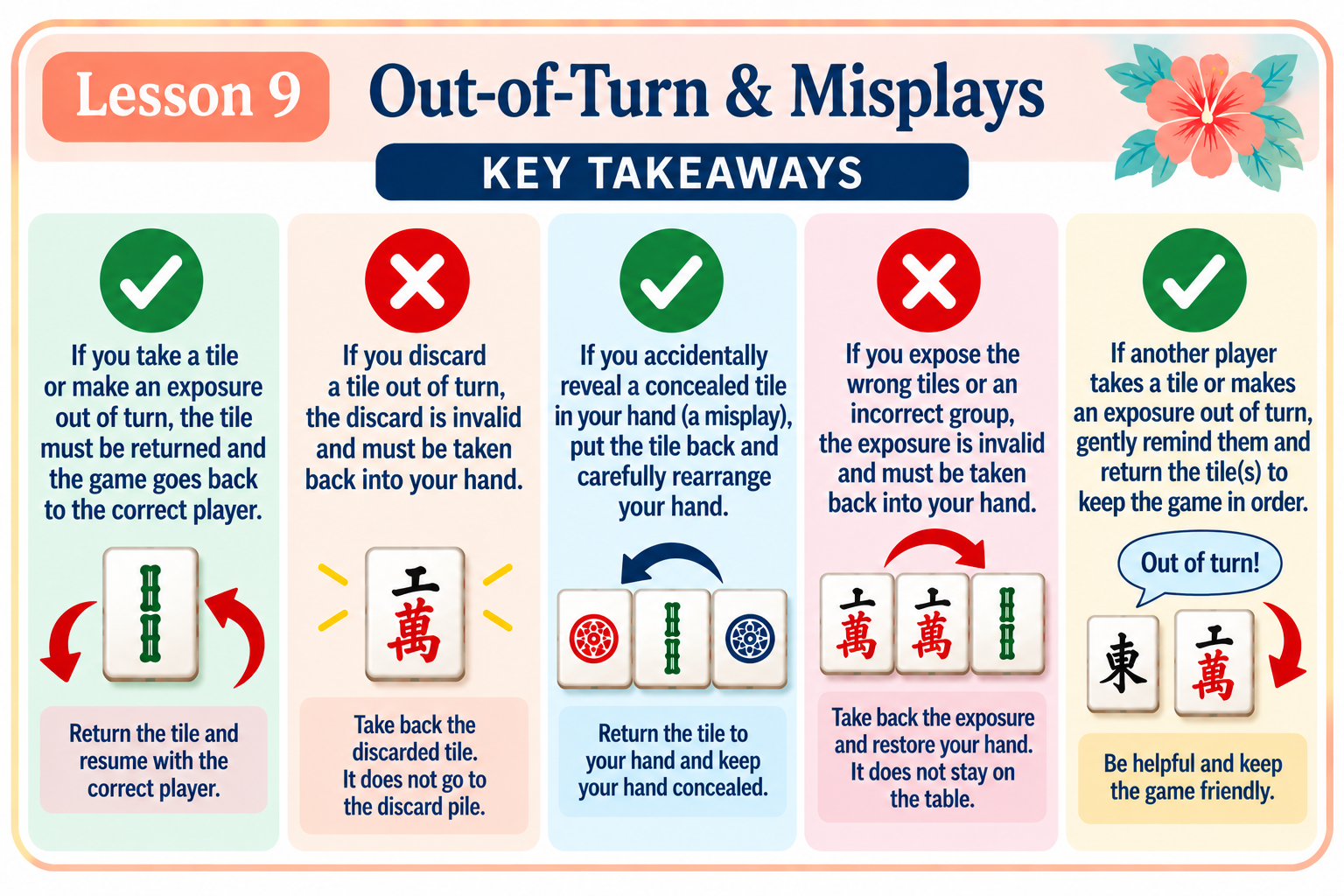
Mistakes happen, especially while learning. Someone may reach for a tile too soon, discard out of turn, or realize an action was incorrect. Stop play as soon as the mistake is noticed and avoid moving additional tiles. Some mistakes can be corrected while others affect the hand, so use the current rules for your game and ask the table or host before continuing.
Lesson 10
Dead Hands
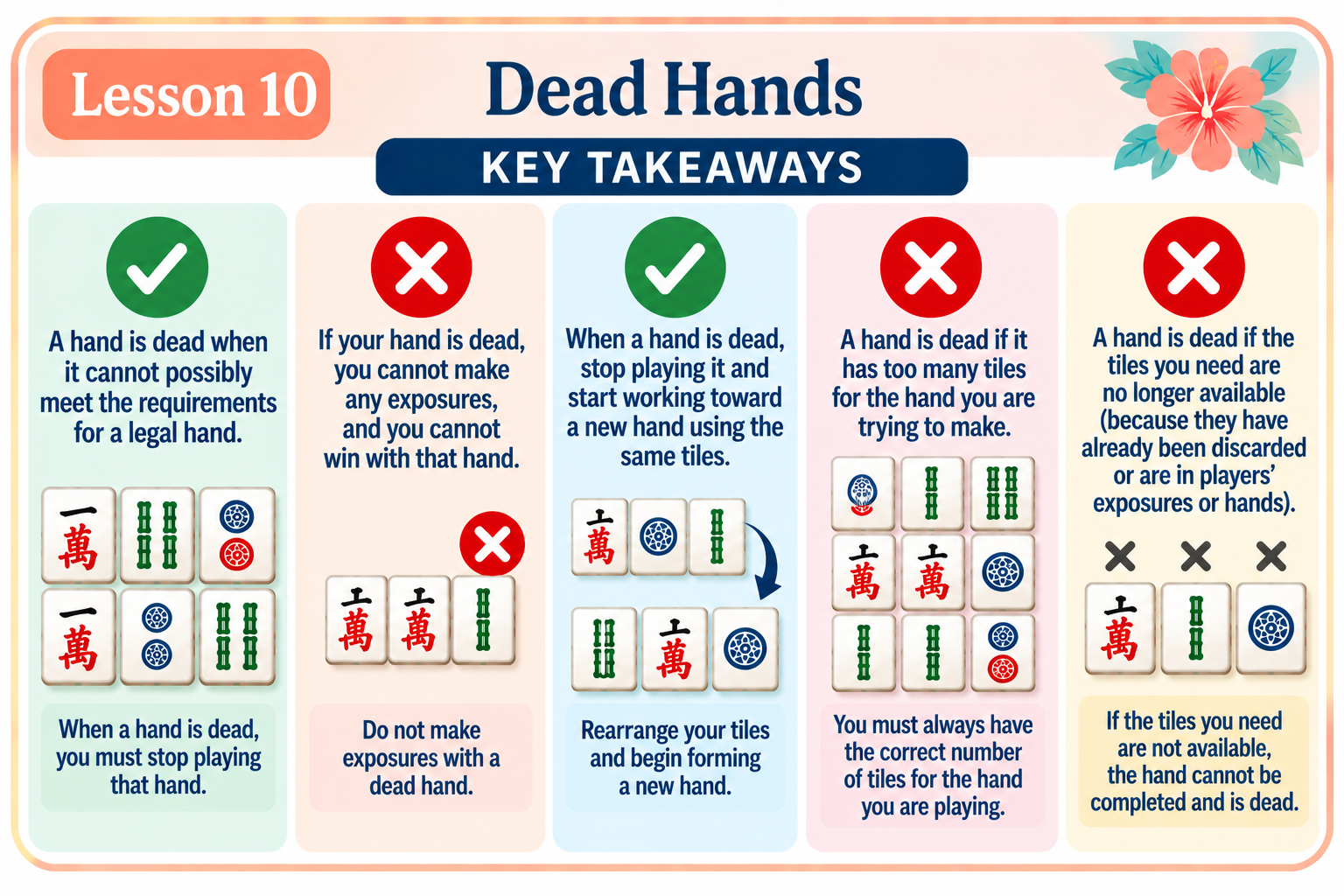
A hand can become dead when a rule violation makes it impossible for that player to continue legally. Examples can include certain incorrect exposures, an incorrect number of tiles, or other rule violations defined by the rules being used. A dead hand does not mean the player did anything terrible—it simply means that hand can no longer win. Because the exact ruling can depend on what happened and when it was noticed, stop and confirm the rule before declaring a hand dead.
Lesson 11
When You’re Not Sure
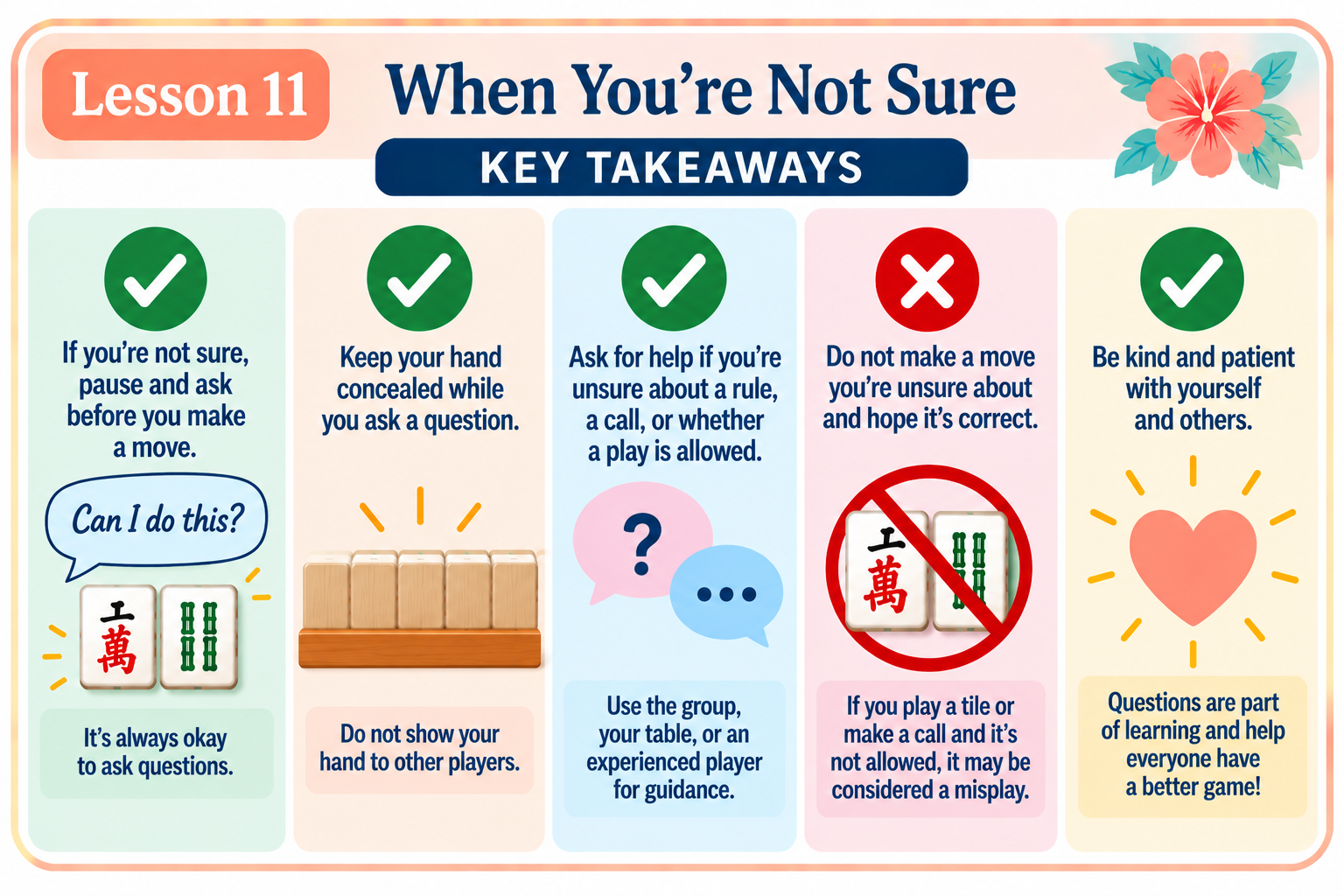
You do not have to memorize every rule before you play. If something unusual happens, pause and ask. Keep the tiles where they are while the table checks the rule so everyone can see what happened. At a Pacific Mahj table, questions are part of learning. The goal is to apply the rules consistently while keeping the game welcoming and enjoyable.
Chapter Complete
You Don’t Have to Memorize Everything
Even experienced players occasionally stop to check a rule. Knowing when to pause and where to find the answer is more important than memorizing every unusual situation. Keep the game moving when the answer is clear, ask when it isn’t, and give other players the same patience you would want while learning. Next, we’ll spend time learning how to use the Mahjong card more confidently.