Lesson 1
Start by Reading Your Rack
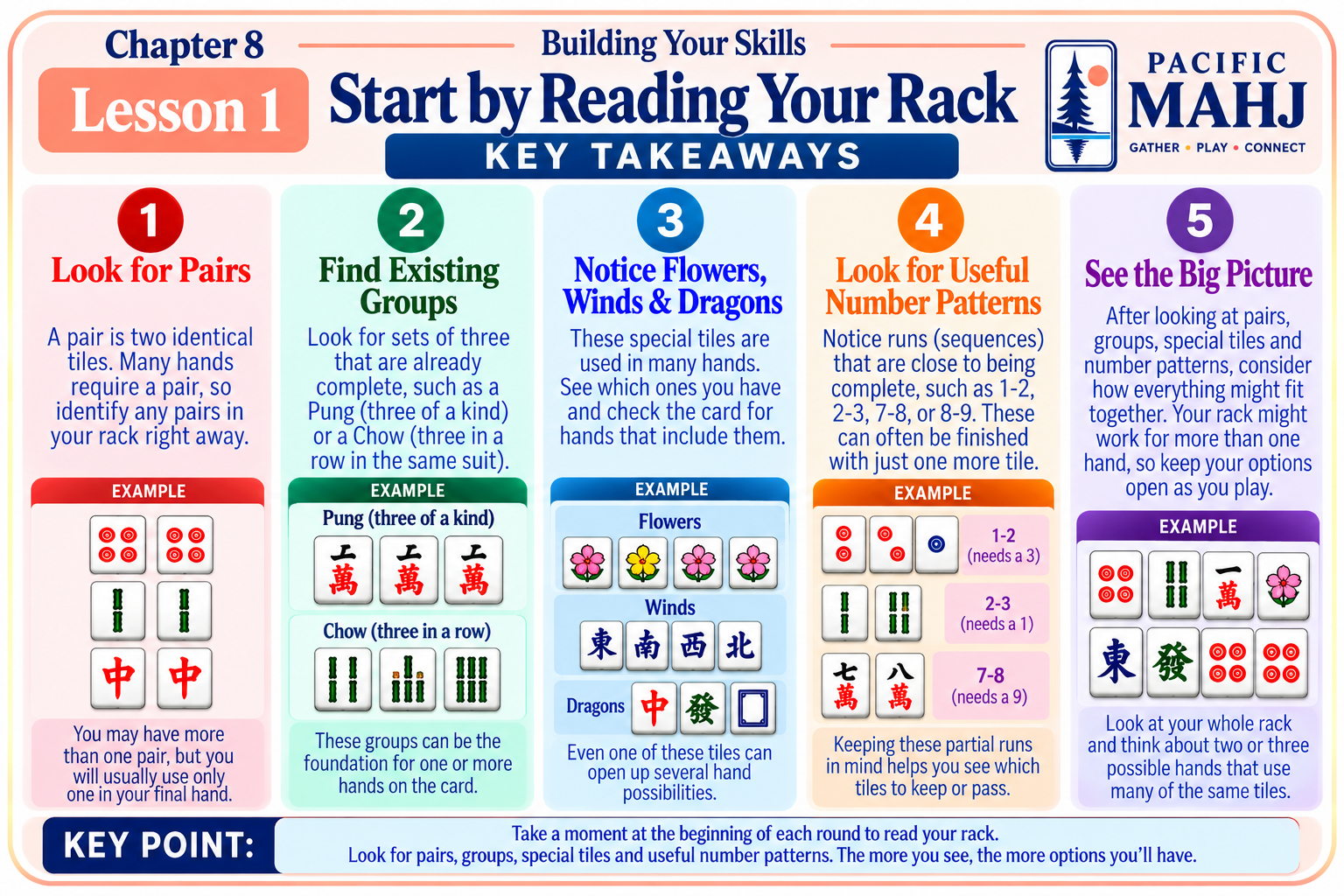
Before choosing a hand, take a moment to see what your rack is already telling you. Look for pairs, matching groups, Flowers, Winds, Dragons, and useful number patterns. Notice which tiles seem to work together instead of evaluating each tile by itself. Reading your rack first gives you a clearer starting point and helps you find card hands that fit what you already have.
Lesson 2
Look for More Than One Possibility
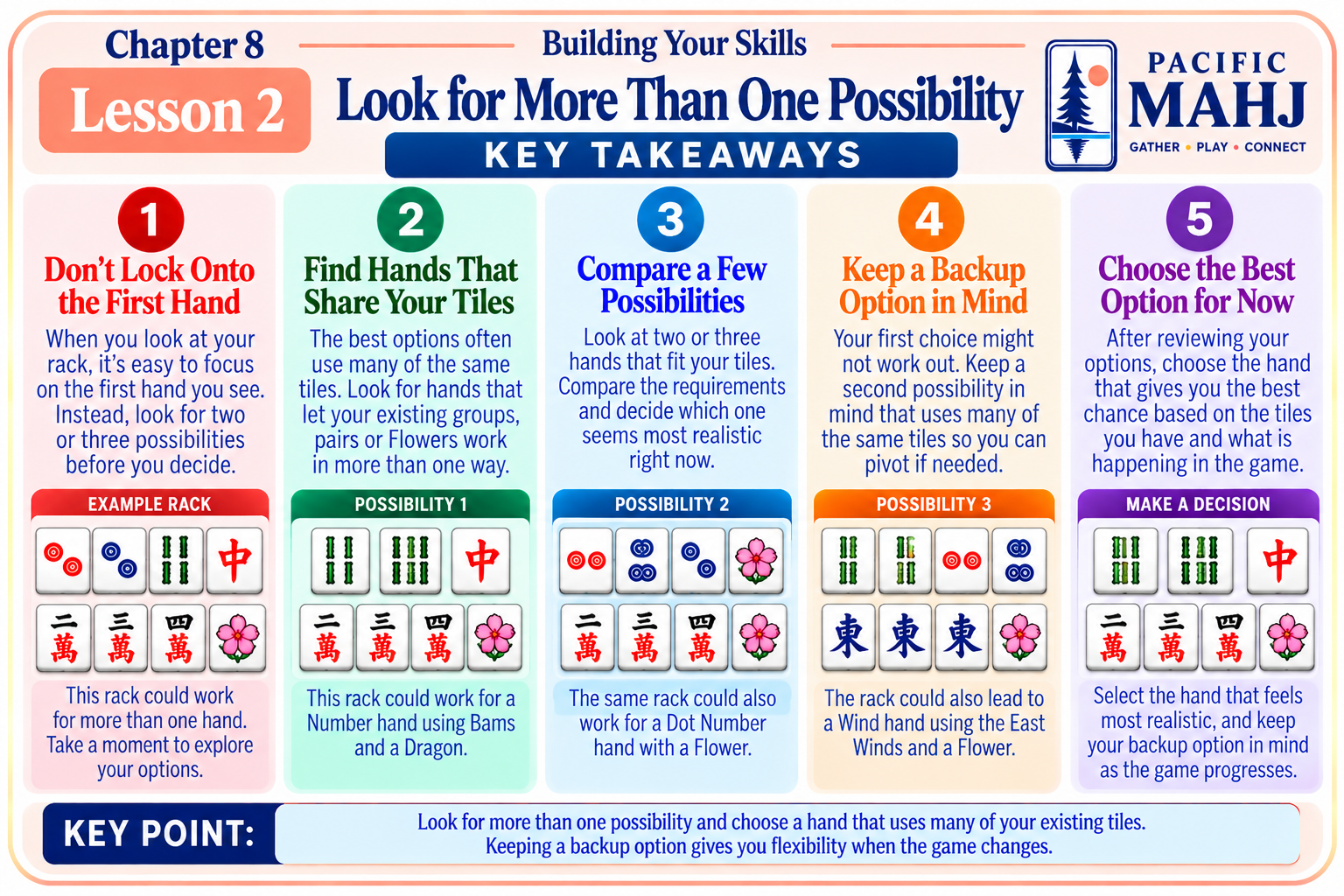
Avoid locking onto the first hand that looks promising. Look for two or three possible hands that share many of the same tiles. Keeping several options open gives you flexibility during the Charleston and early play, and makes it easier to change direction when the tiles develop differently than you expected.
Lesson 3
Choosing What to Keep
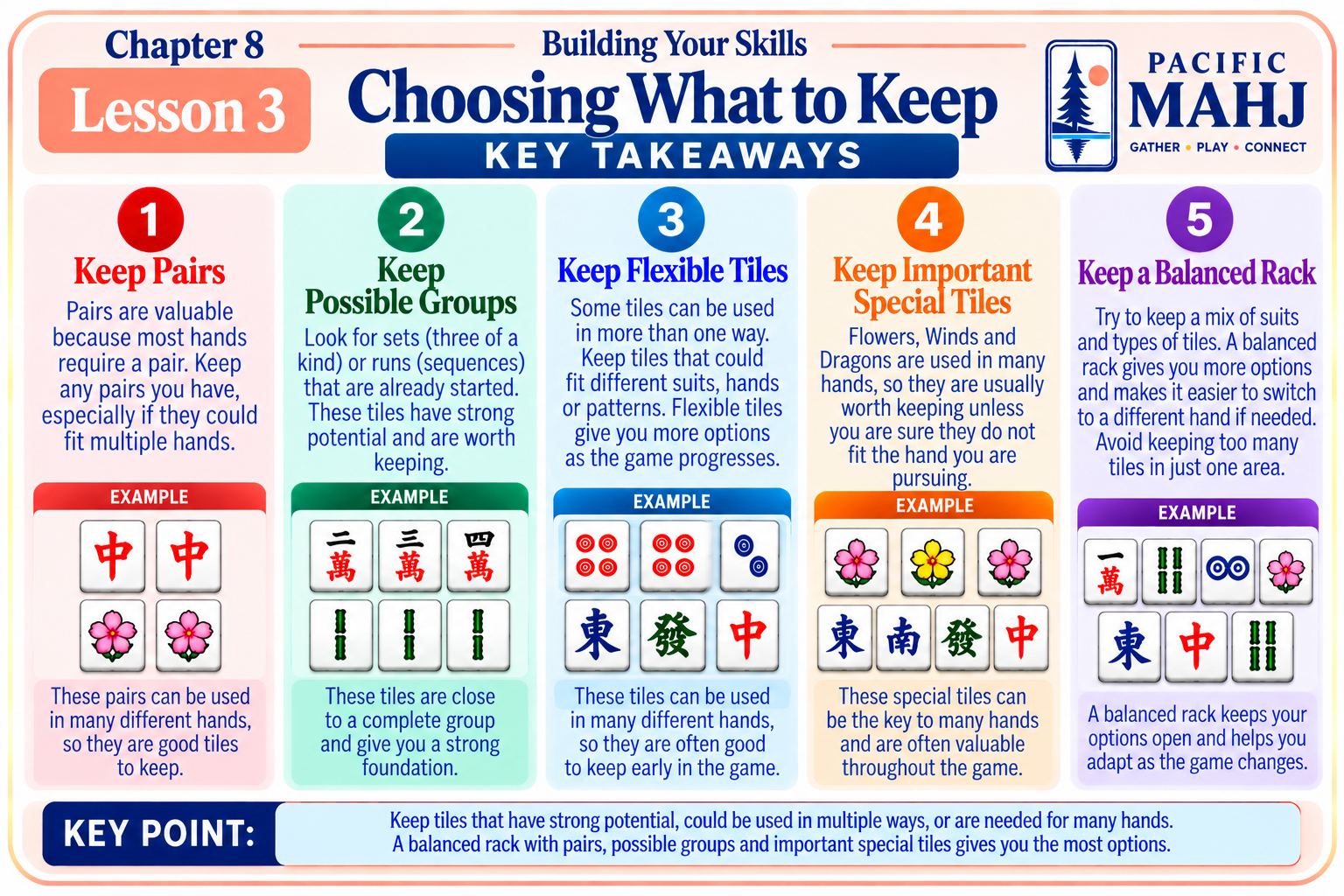
Keep tiles that support the strongest possibilities in your rack. Pairs, matching groups, useful Flowers, Winds or Dragons, and tiles that work across more than one possible hand often deserve priority. A tile becomes more valuable when it helps several options at once. The goal is to keep the tiles that give your hand the best combination of strength and flexibility.
Lesson 4
Choosing What to Pass
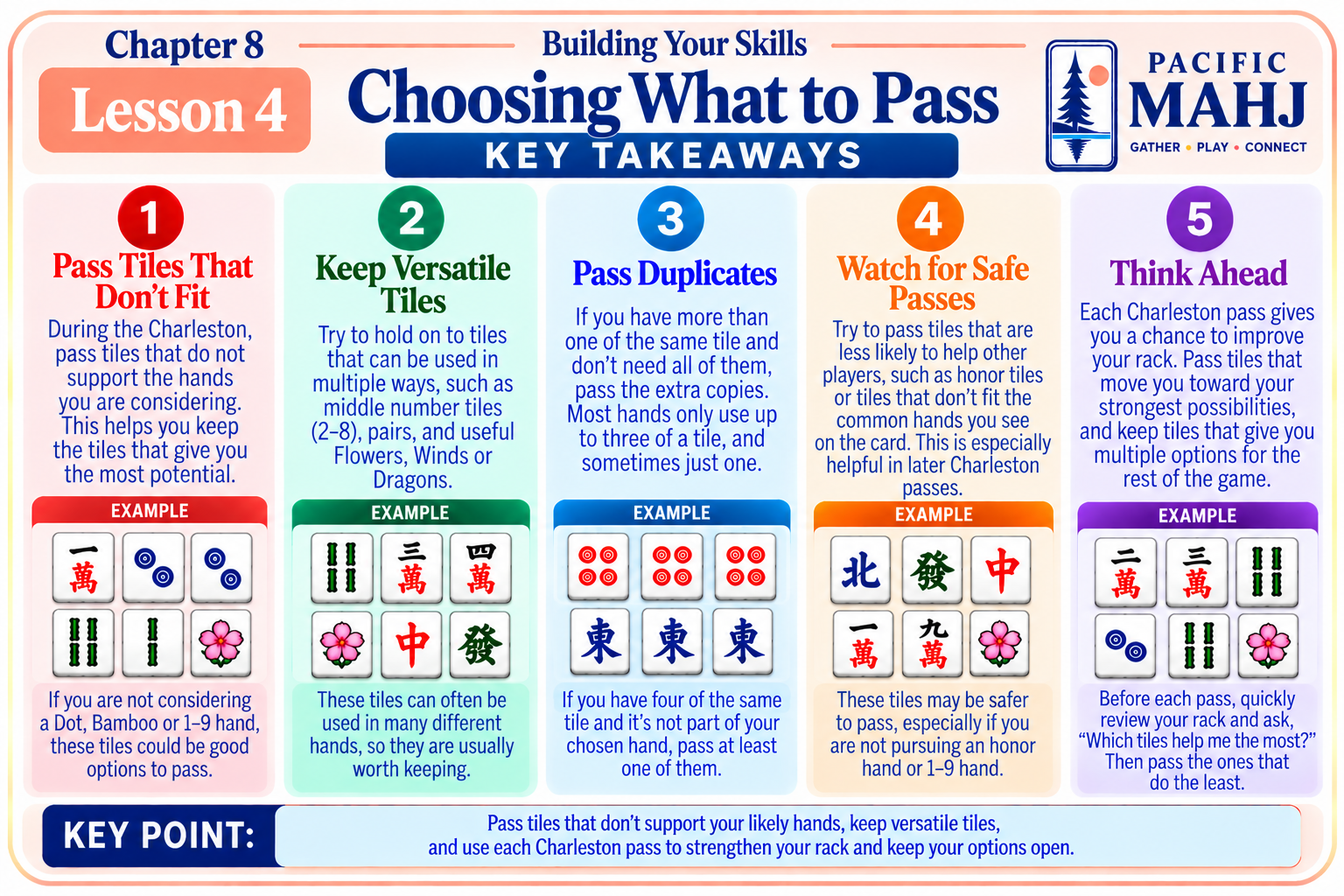
During the Charleston, pass tiles that do the least for the hands you are considering. Protect pairs, useful groups, and versatile tiles while moving tiles that do not support your likely directions. When several tiles could be passed, think about which ones you are least likely to regret losing. Each pass is another opportunity to strengthen your rack while keeping your options open.
Lesson 5
Watch What Other Players Discard
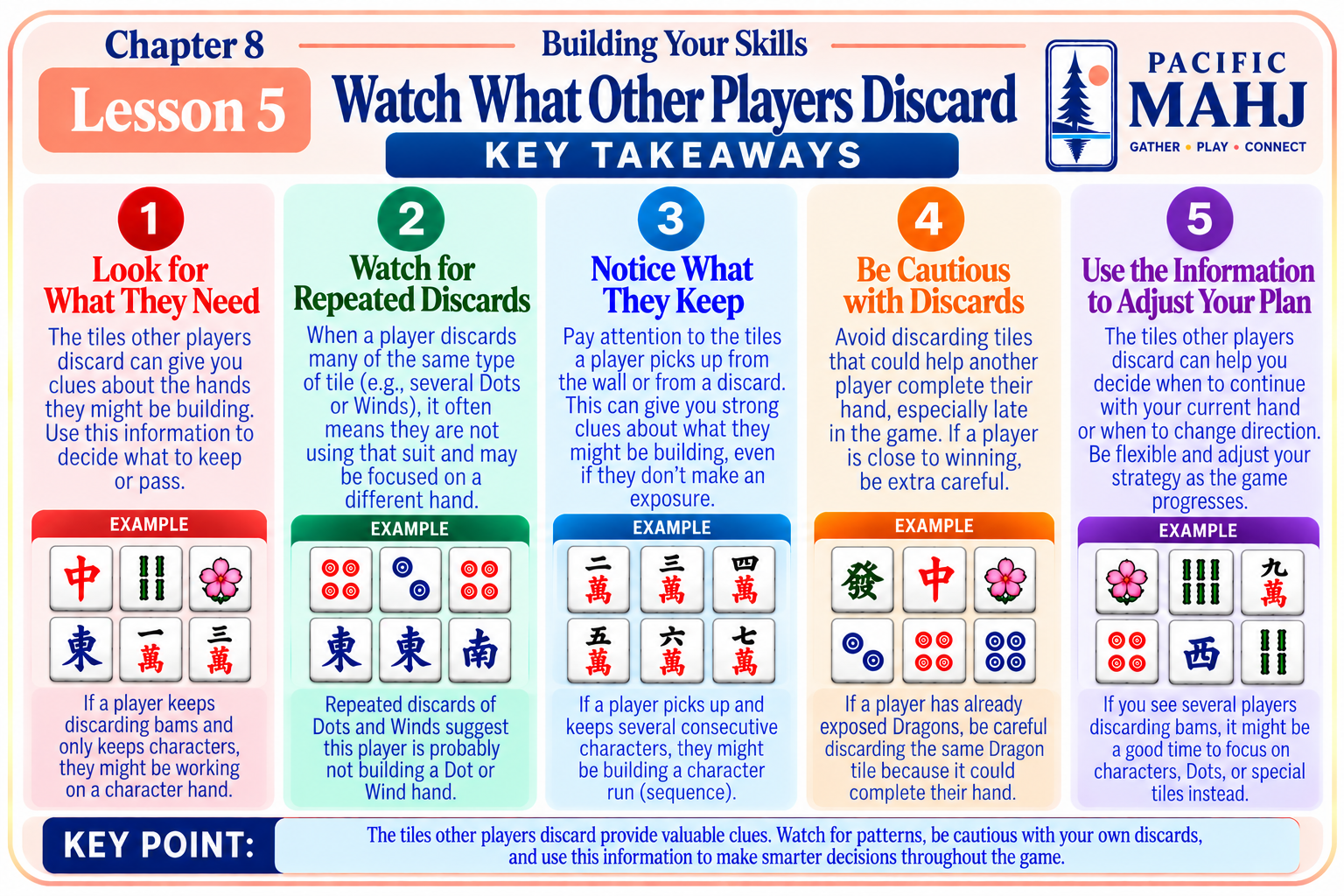
The discard table gives you useful information throughout the game. Notice which tiles are appearing repeatedly, which suits seem plentiful, and whether tiles you need are already being discarded. A tile that has appeared several times may be harder to obtain later. Watching the table helps you judge whether your hand is still realistic and can guide safer, smarter decisions.
Lesson 6
Pay Attention to Exposures
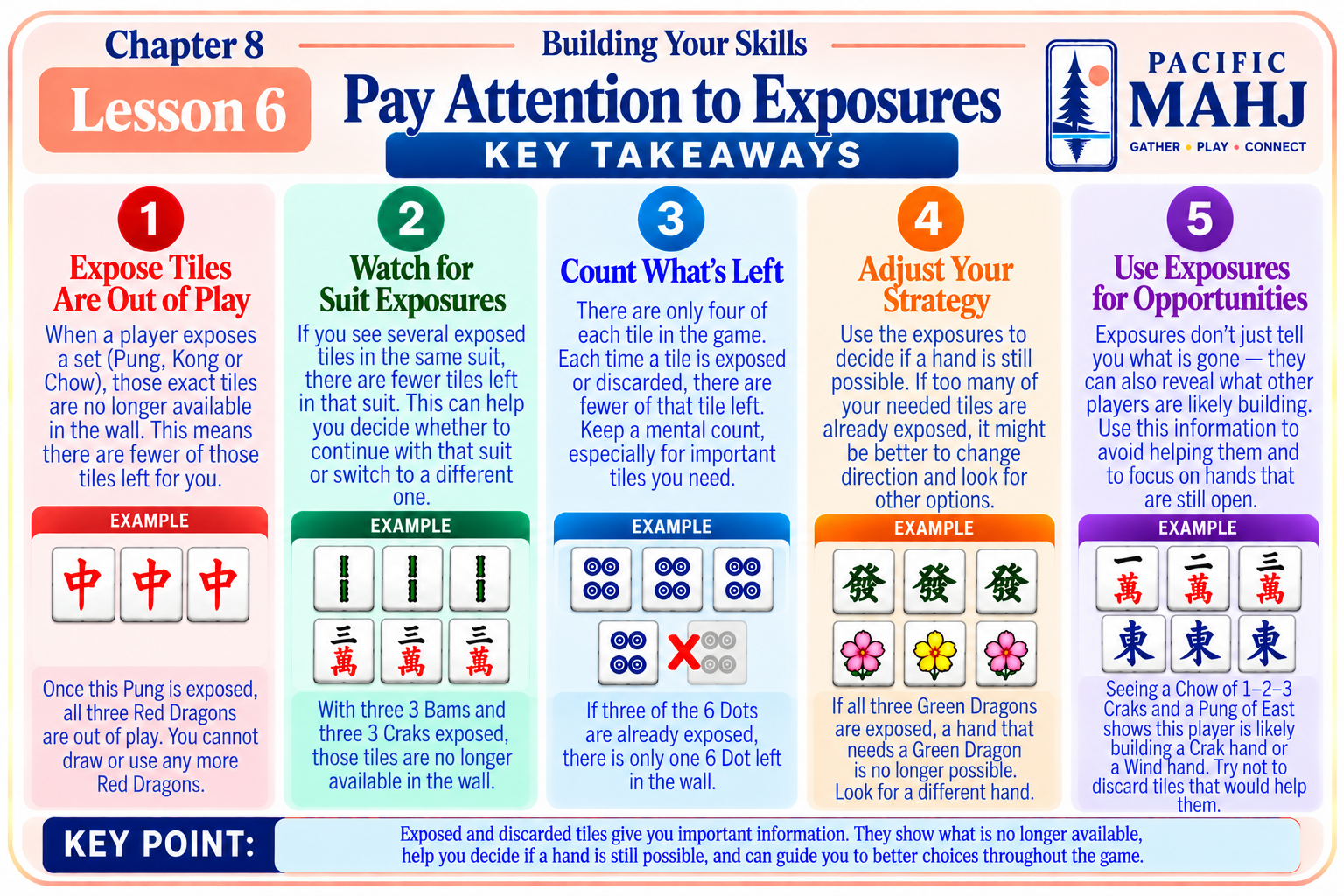
Exposed groups give you clues about what another player may be building. Notice the suits, numbers, Winds, Dragons, and group sizes they place face-up on the rack. Compare those clues with the card and with the tiles you need. You may not know another player’s exact hand, but exposures can help you understand what tiles may be important to them and what options remain for you.
Lesson 7
Know When to Pivot
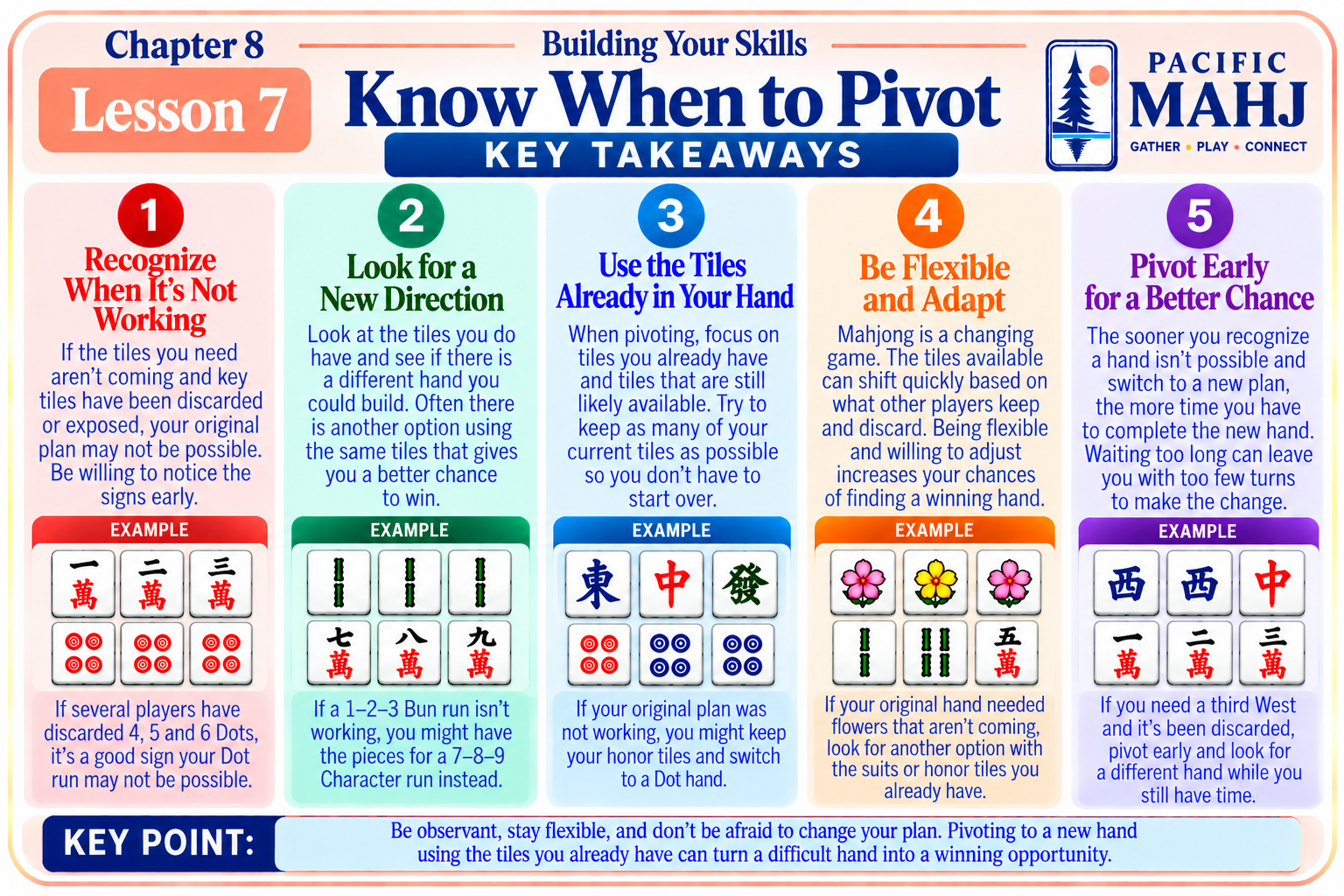
Your first plan does not have to be your final plan. If needed tiles are disappearing, another hand begins to fit better, or the tiles you receive point in a new direction, be willing to pivot. A good pivot usually moves to a hand that reuses many of the strong tiles already in your rack. Changing direction is not a mistake—it is an important Mahjong skill.
Lesson 8
Think Before You Call
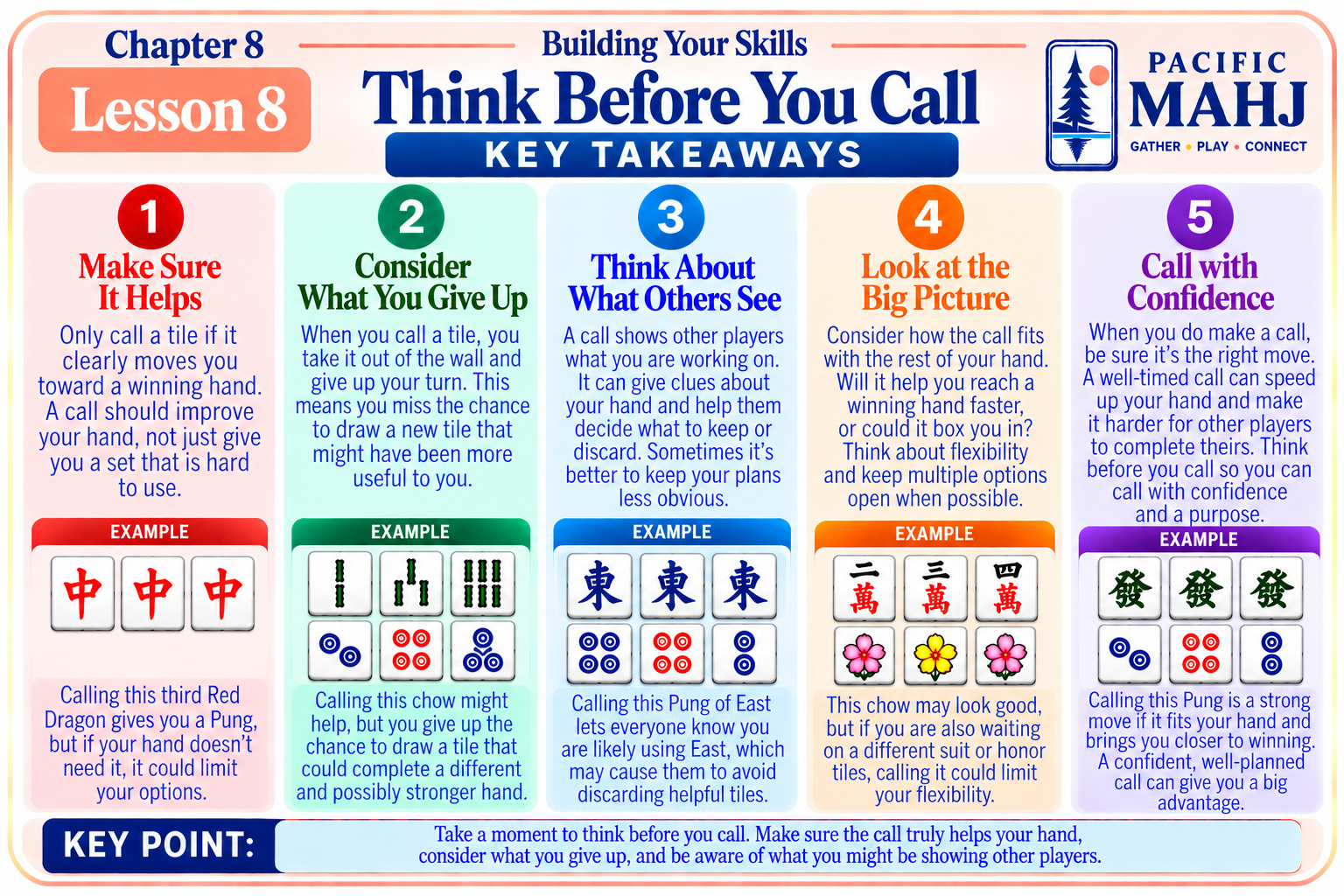
Just because you can legally call a discard does not always mean you should. Before calling, ask whether the tile truly improves the hand you are building and whether making the exposure is worth revealing information to the table. Sometimes calling moves you closer to Mahjong; other times staying concealed preserves flexibility. Take a moment to consider what the call gains and what it gives away.
Lesson 9
Playing Defensively
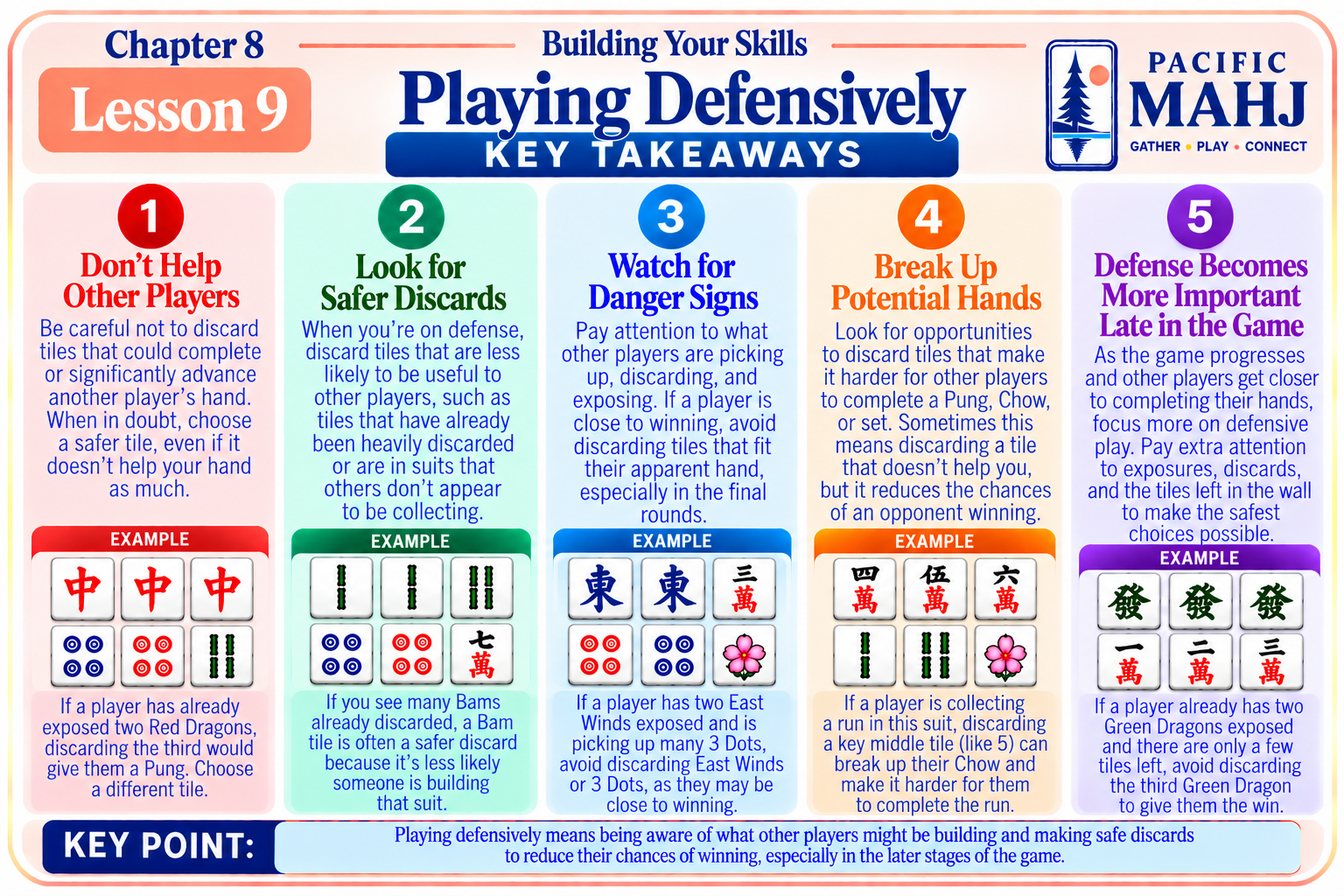
As the game develops, your discards can become more important. Watch the table, pay attention to exposures, and be cautious with tiles that may help a player who appears close to Mahjong. Defensive play does not mean being afraid to discard—it means using the information available to make a more thoughtful choice, especially later in the game.
Lesson 10
Speed Comes with Experience
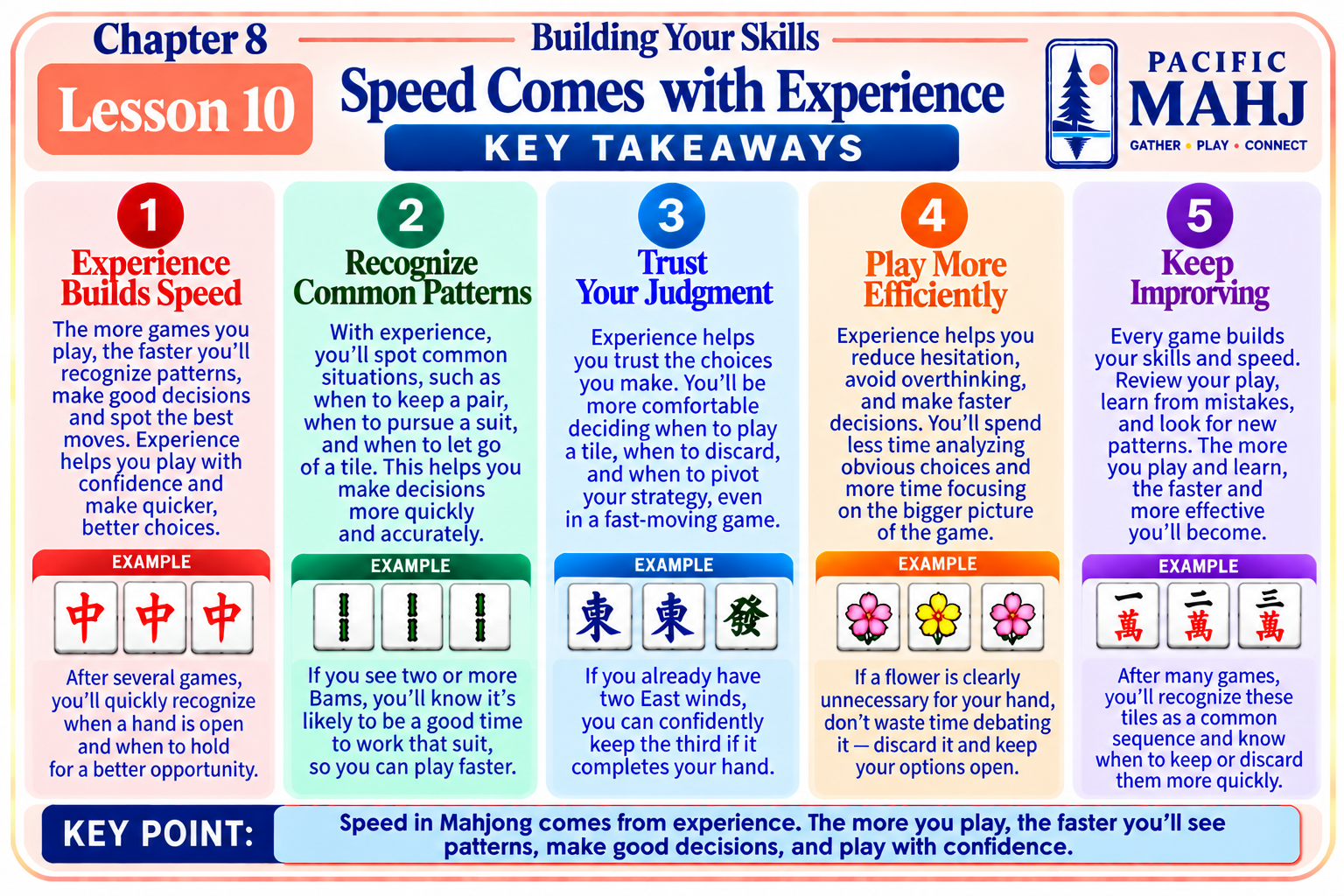
New players do not need to rush. As you play more hands, you will recognize tiles, card patterns, useful groups, and common situations more quickly. Decisions that once required careful thought will begin to feel natural. Focus first on making thoughtful choices and understanding why you are making them. Speed will come on its own with experience.
Lesson 11
Practice with a Purpose
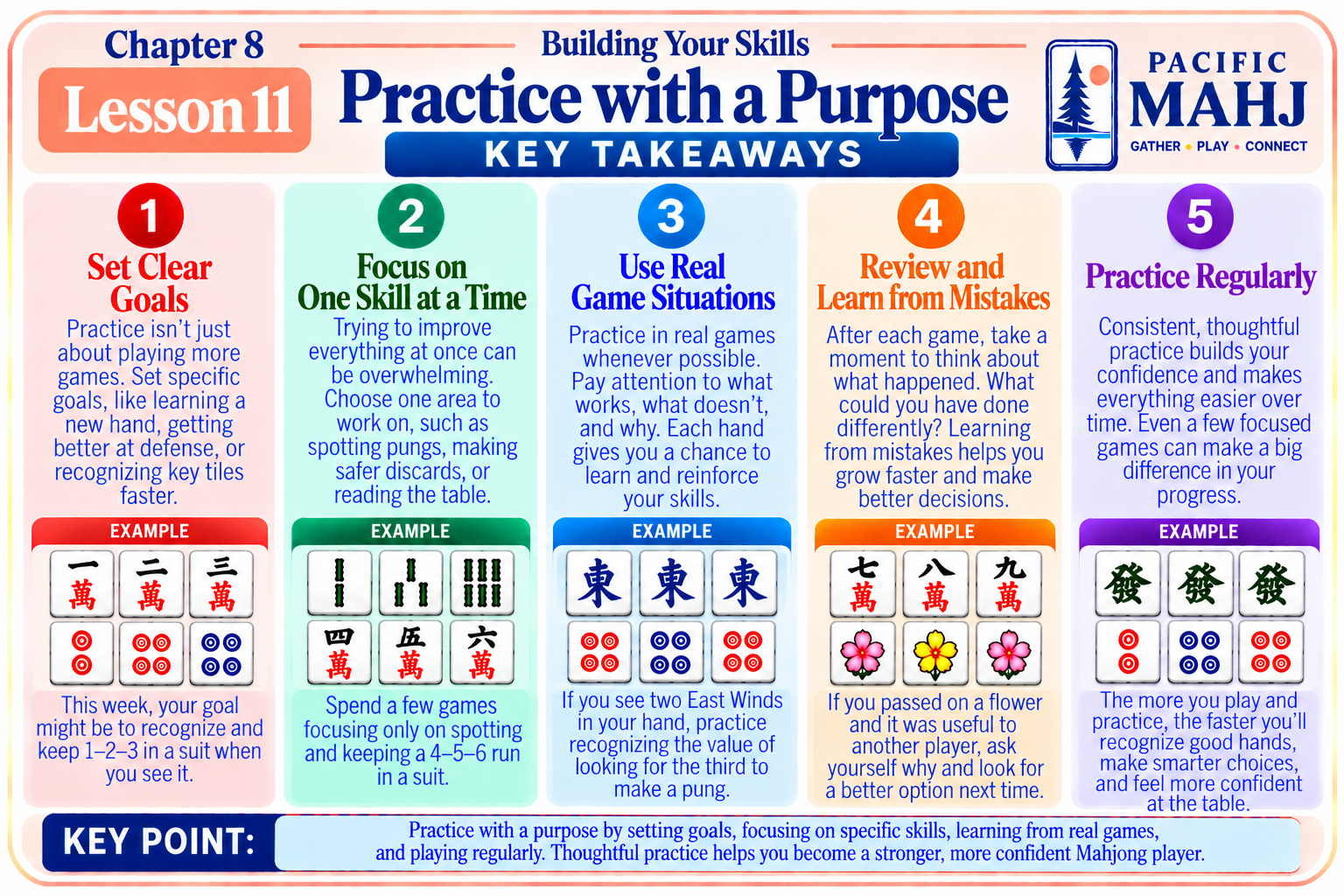
Every game is a chance to improve. Instead of trying to master everything at once, choose one skill to notice or practice—reading your rack, watching discards, finding backup hands, recognizing patterns, or making safer decisions. After a game, think about what went well, what was confusing, and one thing you would like to recognize faster next time. Small, focused improvements add up quickly.
Chapter Complete
You’re Becoming a Mahjong Player
Improvement in Mahjong is not about memorizing everything or never making mistakes. It comes from recognizing patterns, making deliberate choices, staying flexible, and understanding why you are making a move. Each game gives you more experience and more confidence. You now have the skills to sit down at the table, keep learning, and enjoy the game as it unfolds.